Estimated read time: 12 minutes | Category: Science Mysteries | Last updated: June 2025
The Patch of Space That Breaks Satellites
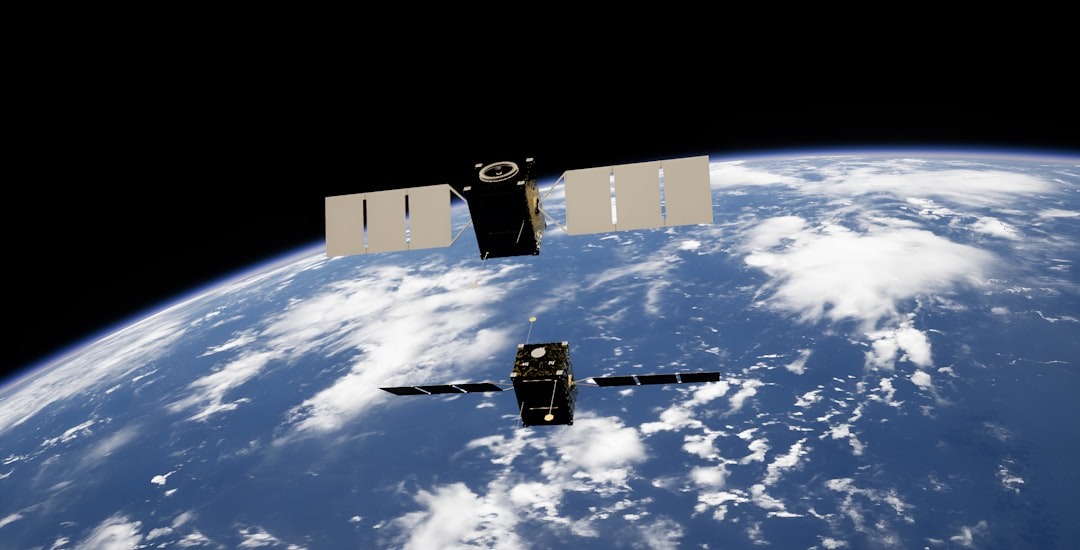
Imagine a region of near-Earth space — roughly the size of a continent, hovering above South America and the South Atlantic Ocean — where the rules change. Where satellites passing through experience unexplained memory errors, instrument failures, and mysterious glitches at rates dramatically higher than anywhere else in orbit. Where astronauts on the International Space Station, floating in darkness with their eyes closed, see flashes and streaks of light that no light source is producing. Where the Hubble Space Telescope routinely powers down its most sensitive instruments as a standard precaution.
This region is not science fiction. It is not a conspiracy theory. It is not named after a triangle.
It is called the South Atlantic Anomaly — the SAA — and it is one of the most consequential and least publicly known features of Earth’s near-space environment. It has been studied by NASA, ESA, and earth science institutions for decades. It is real, well-documented, and slowly growing. And what it reveals about Earth’s magnetic field points toward processes occurring deep within the planet’s core that scientists are still working to fully understand.
What We Know For Certain
- [FACT] The South Atlantic Anomaly is a region where Earth’s inner Van Allen radiation belt makes its closest approach to Earth’s surface — dipping to altitudes as low as approximately 200 kilometres above the South Atlantic Ocean and South America.
- [FACT] The SAA exists because Earth’s magnetic field is not centred on Earth’s geographic centre — it is offset by approximately 450 kilometres toward the Pacific Ocean, causing the inner Van Allen belt to dip significantly lower over the South Atlantic than elsewhere.
- [FACT] Satellites passing through the SAA experience significantly elevated radiation levels — energetic protons and electrons that can cause bit-flip errors in computer memory, instrument malfunctions, and accelerated component degradation.
- [FACT] The Hubble Space Telescope passes through or near the SAA approximately 15% of its orbital time and routinely suspends sensitive science observations during these passes as a protective measure.
- [FACT] Astronauts on the International Space Station and predecessor stations have consistently reported seeing light flashes — phosphenes produced by energetic particles passing through their eyes or directly stimulating their optic nerves — at elevated rates when passing through the SAA.
- [FACT] The SAA is not static — it is drifting westward at approximately 0.3 degrees per year and has been growing in area over recent decades. A secondary centre of weakness has been developing in the southwestern portion of the anomaly since approximately 2016.
- [FACT] The SAA is caused by and reflects the behaviour of Earth’s magnetic field, which is generated by convective motion of molten iron in Earth’s outer core — a process that is not fully understood and continues to change over time.
The Van Allen Belts — The Foundation of the Anomaly
To understand the South Atlantic Anomaly, it is necessary to understand the Van Allen radiation belts — the structures whose behaviour creates it.
[FACT] The Van Allen belts are two concentric regions of energetic charged particles — protons and electrons — trapped by Earth’s magnetic field in a doughnut-shaped region around the planet. The inner belt extends from approximately 1,000 to 6,000 kilometres above Earth’s surface. The outer belt extends from approximately 13,000 to 60,000 kilometres. They were discovered by physicist James Van Allen using data from the Explorer 1 satellite in 1958.
[FACT] The particles in the Van Allen belts are energetic enough to damage satellite electronics, degrade solar panels, and pose radiation hazards to astronauts. The Apollo missions were designed to transit the Van Allen belts as quickly as possible to minimise crew radiation exposure. Modern satellites in low Earth orbit — including the ISS at approximately 400 kilometres altitude — generally pass below or through the lower reaches of the inner belt, experiencing moderate radiation levels except where the belt dips closer to Earth’s surface.
[FACT] Earth’s magnetic field — which traps the Van Allen belt particles and determines the belts’ shape and location — is not a simple bar magnet aligned with Earth’s rotational axis. It is generated by the complex convective motion of liquid iron in Earth’s outer core, and this motion produces a field that is irregular, tilted relative to Earth’s spin axis, and offset from Earth’s geographic centre.
[FACT] The offset between Earth’s magnetic centre and geographic centre — approximately 450 kilometres toward the Pacific — means that on the opposite side of the planet, the Van Allen belts are correspondingly closer to Earth’s surface. That opposite side is the South Atlantic, producing the SAA.
What Happens in the SAA
Satellite Glitches and Failures
[FACT] The elevated particle flux within the SAA produces a well-documented pattern of satellite anomalies. Energetic protons and electrons colliding with satellite components can flip individual bits in computer memory — changing a 0 to a 1 or vice versa — causing software errors, data corruption, and in severe cases, mission-threatening malfunctions.
[FACT] The European Space Agency’s GIOVE-A satellite — a test satellite for the Galileo navigation system — documented anomaly rates in the SAA that were dramatically higher than in other orbital regions. Multiple Earth observation satellites have experienced temporary or permanent instrument failures attributable to SAA radiation exposure.
[FACT] Satellite operators design missions to account for SAA exposure — shielding critical components, storing data in radiation-hardened memory, scheduling sensitive operations to avoid SAA passes where possible, and building in redundancy to compensate for SAA-induced errors. The SAA is a known operational constraint for virtually every low Earth orbit satellite mission.
The Hubble Space Telescope
[FACT] The Hubble Space Telescope at approximately 540 kilometres altitude has one of the best-documented operational records of SAA impact on space instruments. Hubble passes through or near the SAA during approximately 15% of its orbital time. During these passes, NASA routinely suspends the most sensitive science observations — particularly with instruments vulnerable to cosmic ray and energetic particle interference — to protect data quality and instrument health.
[FACT] Hubble has experienced numerous anomalous events attributable to SAA radiation over its 35-year mission. The telescope’s computer systems have been designed to tolerate bit-flip errors from radiation exposure, with error correction systems specifically intended to manage the elevated SAA environment.
The ISS and Astronaut Experiences
[FACT] The International Space Station at approximately 400 kilometres altitude passes through the lower portion of the SAA on many of its orbital revolutions. Astronauts on the ISS — and previously on Mir and Skylab — have consistently reported seeing light flashes, particularly when the station passes through the SAA.
[FACT] These light flashes — experienced even with eyes closed and in complete darkness — are caused by energetic particles passing through the vitreous humour of the eye and triggering the retinal cells directly, or by particles passing directly through the visual cortex. The phenomenon is called phosphene production and is well understood neurologically. The increased frequency of phosphene events in the SAA is consistent with the elevated particle flux in that region.
[FACT] Apollo astronauts also reported light flashes during their missions — both in the Van Allen belts during transit and in lunar orbit. The reports from space crews have been consistent across six decades of human spaceflight and across multiple national space programmes, providing a remarkably consistent human testimony of radiation effects in space.
Why the Anomaly Exists — The Deep Earth Connection
The South Atlantic Anomaly is not just a space weather phenomenon — it is a window into processes occurring thousands of kilometres beneath Earth’s surface.
[FACT] Earth’s magnetic field is generated by the geodynamo — the convective circulation of molten iron in Earth’s liquid outer core, which extends from approximately 2,900 to 5,100 kilometres below the surface. This circulation generates electrical currents that produce Earth’s magnetic field. The details of how the geodynamo works, and why Earth’s magnetic field has the specific shape and strength it does, are active areas of geophysical research.
[FACT] The SAA is associated with a region of reversed magnetic polarity deep beneath the South Atlantic — an area called the South Atlantic Large Low Shear Velocity Province, or LLSVP, where seismic wave velocities indicate unusual material properties in the lower mantle. Some researchers have proposed that this deep mantle structure influences the overlying outer core flow in ways that produce the magnetic field weakness observed at the surface and in near-Earth space.
[FACT] Earth’s magnetic field has reversed polarity multiple times throughout geological history — the north and south magnetic poles have swapped positions approximately 183 times in the past 83 million years. The current period of normal polarity has lasted approximately 780,000 years — longer than average. Some researchers have interpreted the SAA’s existence and growth as a possible early indicator of a future magnetic field reversal, though this interpretation is debated.
Some geophysicists have proposed that the SAA — and the general weakening of Earth’s magnetic field that has been measured over the past 200 years, at a rate of approximately 5% per century — may be early indicators of an approaching geomagnetic reversal. During a full reversal, Earth’s magnetic field weakens significantly before reorganising with opposite polarity — a process that takes thousands of years and during which Earth’s surface would be significantly less protected from solar and cosmic radiation. [FACT] This theory is taken seriously by geophysicists but is not the consensus view. Many researchers consider the current weakening to be within the normal range of magnetic field variation and not necessarily a precursor to reversal. The development of a secondary centre in the SAA since 2016 has renewed interest in this question.
Some popular science coverage has suggested that a magnetic reversal could occur within the next few thousand years based on current trends in the SAA and the general magnetic field weakening. [FACT] Geomagnetic reversals cannot currently be predicted with precision. The available evidence indicates the field is weakening but does not establish a reliable timeline for reversal. Confident claims about when a reversal will occur should be treated with significant scepticism — the geodynamo is a complex, chaotic system that does not follow predictable schedules.
The SAA Is Growing
[FACT] Measurements from the European Space Agency’s Swarm constellation — three satellites launched in 2013 specifically to study Earth’s magnetic field — have confirmed that the SAA is not static. It is drifting westward and expanding in area over time.
[FACT] More significantly, analysis of Swarm data published in 2020 revealed that the SAA appears to be splitting. A second, separate centre of minimum magnetic field strength has been developing in the southwestern portion of the anomaly — located over the southern tip of South America — since approximately 2016. This development suggests the SAA may eventually separate into two distinct anomalies, with implications for satellite operations and for understanding the underlying geomagnetic processes.
[FACT] The minimum field strength within the SAA has decreased by approximately 8% between 1970 and 2020 — meaning the region’s particle radiation levels at satellite altitudes have been increasing over time. This trend has direct operational implications for satellites currently in orbit and for the design of future missions.
[FACT] ESA’s Swarm mission continues to monitor the SAA and the broader behaviour of Earth’s magnetic field. The data it generates is publicly available and has been used in numerous peer-reviewed studies of the SAA’s behaviour and causes.
Practical Implications — What the SAA Means for Space Operations
[FACT] The South Atlantic Anomaly is a significant operational constraint for every space mission in low Earth orbit. Mission designers must account for SAA radiation exposure in spacecraft shielding, component selection, software design, and operational procedures.
[FACT] The planned increase in commercial satellite constellations — with companies including SpaceX (Starlink), Amazon (Kuiper), and others deploying thousands of satellites in low Earth orbit — means that the SAA will affect an increasing number of operational assets. The satellite industry has developed increasingly sophisticated approaches to managing SAA radiation effects, including real-time monitoring of orbital positions relative to the SAA and adaptive operational protocols.
[FACT] Future crewed missions beyond low Earth orbit — including proposed lunar and Mars missions — will require transit through the full Van Allen belts and exposure to solar and cosmic radiation without Earth’s magnetic field protection. The SAA represents the most intense radiation environment routinely encountered in low Earth orbit and provides a valuable testbed for radiation management technologies and strategies relevant to deep space exploration.
[FACT] GPS and other navigation satellite systems are less affected by the SAA because they orbit at much higher altitudes — well above the inner Van Allen belt — and are designed for the radiation environment of medium Earth orbit. However, the expanding SAA and potential future magnetic field changes are monitored as long-term factors in navigation satellite system planning.
What Would Happen If the Magnetic Field Reversed
The question of what a geomagnetic reversal would mean for Earth and its inhabitants is worth addressing directly, given how frequently the SAA is linked to this scenario in popular coverage.
[FACT] During a geomagnetic reversal, Earth’s magnetic field weakens significantly before reorganising with opposite polarity. During the transition period — which geological evidence suggests lasts thousands of years — the magnetic field’s protective effect against solar wind and cosmic radiation would be reduced.
[FACT] The practical consequences of a magnetic reversal for modern technology and human health are debated. Satellite operations would be significantly affected — the SAA would expand dramatically during the field weakening phase, affecting a much larger proportion of low Earth orbit. Power grids could be vulnerable to increased geomagnetic storm activity. Navigation systems relying on magnetic compasses would require adjustment.
[FACT] Evidence from geological records of previous reversals — preserved in the magnetisation of ancient rocks — does not indicate mass extinctions or catastrophic biological events associated with reversal events. Life on Earth has survived 183 documented reversals. The evidence suggests the biological consequences of reduced magnetic field protection are manageable, though this question continues to be studied.
[FACT] The aurora borealis and aurora australis — the northern and southern lights — are produced by solar wind particles interacting with Earth’s magnetic field and atmosphere near the poles. During a magnetic reversal, with a weakened and reorganised field, auroral displays might be visible at much lower latitudes than currently — one of the more visually dramatic potential consequences of the process.
Conclusion
The South Atlantic Anomaly is not a mystery in the sense of being unexplained — its cause is well understood, its behaviour is continuously monitored, and its implications for space operations are actively managed. What makes it genuinely remarkable is what it connects: a practical engineering problem for satellite operators with one of the most profound questions in geophysics — what is happening deep inside Earth’s core, and what does it mean for the planet’s future?
The SAA is a window through which near-Earth space reveals the deep interior of the planet. The molten iron churning thousands of kilometres below South America, generating a magnetic field that happens to be weakest precisely above that region, is the same process that has repeatedly reversed Earth’s polarity over geological time. Whether it is doing so now — slowly, over thousands of years — is a question that researchers continue to investigate.
Meanwhile, satellites glitch. Hubble closes its eyes. Astronauts see stars that are not there. And deep below the South Atlantic, something in Earth’s outer core continues to do whatever it is doing — generating the magnetic field that makes Earth habitable, expressing its complexity in a patch of space above South America, and leaving scientists with more questions than answers about what comes next.
Written and reviewed by the MysteryVerse editorial team. Facts sourced from ESA Swarm mission publications, NASA geomagnetic field research, published peer-reviewed research in Geophysical Research Letters and Nature Geoscience, and NASA’s operational documentation for Hubble Space Telescope and ISS radiation management procedures.
ESA Swarm mission data and publications are publicly available at esa.int/swarm. The SAA’s current state and historical trend data can be accessed through NOAA’s National Centers for Environmental Information geomagnetic data archive.
Spotted an error? Contact us and we will correct it promptly.