Estimated read time: 13 minutes | Category: Unsolved Mysteries | Last updated: June 2025

The Last Transmission
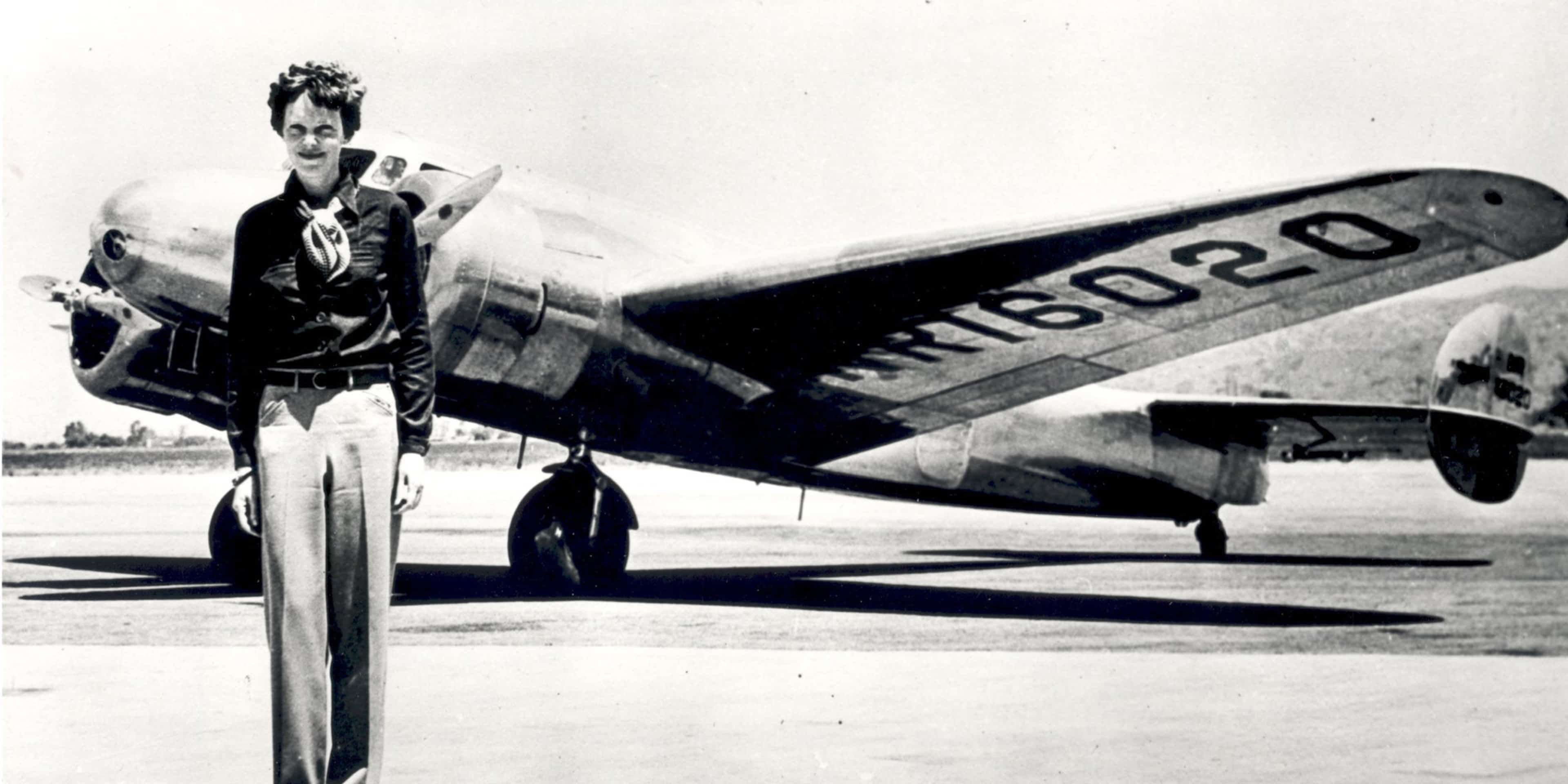
At 8:43 AM on July 2, 1937, the US Coast Guard cutter Itasca, stationed near Howland Island in the central Pacific, received the final confirmed transmission from Amelia Earhart’s Lockheed Electra aircraft:
“We are on the line 157 337. We will repeat this message. We will repeat this on 6210 kilocycles. Wait. Listening on 6210 kilocycles. We are running on line north and south.”
The signal was strong — Earhart was close. But the Itasca could not get a bearing on her position. Radio operator Leo Bellarts transmitted frantically on every frequency. There was no reply. The Electra — carrying Earhart and her navigator Fred Noonan — was never heard from again.
Amelia Earhart was at that moment the most famous aviator in the world. She had been the first woman to fly solo across the Atlantic, the first person to fly solo from Hawaii to the mainland United States, and was attempting to become the first person to circumnavigate the globe at its equatorial widest. She was 39 years old. She had 22,000 miles behind her. She needed to find a small coral island in the vast Pacific — and she could not.
What happened in the hours after that final transmission has been debated, investigated, and theorised about for 87 years. It remains one of the most genuinely contested unsolved mysteries in aviation history.
What We Know For Certain
- [FACT] Amelia Earhart and navigator Fred Noonan departed Lae, New Guinea on July 2, 1937, on the longest and most difficult leg of their circumnavigation attempt — a 2,556-mile overwater flight to tiny Howland Island in the central Pacific.
- [FACT] Howland Island is approximately 1.6 miles long and 0.5 miles wide, lying approximately 1,700 miles southwest of Hawaii. Finding it without reliable navigation was an extraordinary challenge.
- [FACT] Communication between the Electra and the Itasca was severely compromised — Earhart and Noonan could hear the Itasca’s transmissions but the Itasca could not take a radio bearing on the Electra due to technical issues and frequency mismatches.
- [FACT] The US Navy launched the largest search in its history at that time — involving nine ships and 66 aircraft over 16 days, covering approximately 250,000 square miles of ocean. No wreckage, no survivors, and no remains were found.
- [FACT] Earhart and Noonan were officially declared dead on January 5, 1939.
- [FACT] No confirmed wreckage of the Lockheed Electra has ever been found despite multiple modern search expeditions using sonar and underwater survey technology.
- [FACT] A bone fragment found on Nikumaroro Island (then Gardner Island) in 1940 was re-examined by forensic anthropologists in 2018 and assessed as likely belonging to a woman of Earhart’s approximate age and stature — though this identification has been disputed by other researchers.
The Flight — What We Know About the Final Hours
The Circumnavigation Attempt
[FACT] Earhart’s second attempt at a circumnavigation — the first had been aborted in March 1937 due to a crash on takeoff in Hawaii — began on June 1, 1937 from Oakland, California. She flew east to Miami, then south and east through South America, Africa, the Indian subcontinent, Southeast Asia, and Australia before arriving at Lae, New Guinea on June 29.
[FACT] The Lae-to-Howland leg was the most technically demanding of the entire flight — a long overwater crossing to a tiny target with no landmarks, requiring precise celestial navigation and reliable radio communication. Noonan, an experienced navigator who had helped chart the original Pan American transpacific routes, was well qualified for the navigation. The radio communication arrangements proved disastrously inadequate.
The Communication Problem
[FACT] The radio situation on the final flight was severely compromised. Earhart had removed the trailing wire antenna that would have allowed long-range high-frequency radio communication — reportedly because she found it awkward to deploy. She was operating on frequencies that limited the Itasca’s ability to take a directional bearing on her signal.
[FACT] The Itasca transmitted weather and homing signals continuously on the frequencies Earhart was supposed to be monitoring. The logs show she received at least some of these transmissions but could not respond in a way that allowed her position to be determined. The technical details of what went wrong with the radio communication remain debated — different researchers have assigned different degrees of responsibility to Earhart’s equipment choices, the Itasca’s crew, and pre-flight communication planning failures.
The Final Transmissions
[FACT] The Itasca’s radio logs record a series of increasingly urgent transmissions from Earhart in the hours before the final message. At 7:42 AM she reported: “We must be on you but cannot see you, but gas is running low. Been unable to reach you by radio. We are flying at altitude 1,000 feet.” At 8:00 AM: “We are circling but cannot hear you. Go ahead on 7500 either now or on the scheduled time on half hour.” The final transmission at 8:43 AM referenced “line 157 337” — a sun line calculated by Noonan that placed the aircraft somewhere on a line running northwest-southeast through Howland Island’s position.
[FACT] The reference to “line 157 337” is one of the most analysed details of the disappearance. A sun line at that bearing through Howland Island extends northwest toward the open Pacific and southeast toward the Phoenix Islands — a chain that includes the uninhabited Gardner Island (now Nikumaroro). This detail is central to the Nikumaroro hypothesis.
The Leading Theories
The US government’s official position, and the conclusion of the original 1937 investigation, is that Earhart and Noonan failed to locate Howland Island, ran out of fuel, and ditched in the ocean near the island. The Electra would have sunk rapidly in deep water, explaining the absence of wreckage. [FACT] The ocean depth in the area around Howland Island ranges from 4,000 to 5,000 metres — deep enough to make wreckage recovery extremely difficult with any technology available before the 21st century. Multiple modern sonar searches of the area have not found confirmed wreckage, though the search area is enormous and coverage remains incomplete.
The International Group for Historic Aircraft Recovery (TIGHAR) has for decades championed the theory that Earhart and Noonan, unable to find Howland Island, flew southeast along the 157-337 sun line, located the uninhabited Gardner Island (now Nikumaroro), and landed on its flat reef. [FACT] Several pieces of circumstantial evidence support this hypothesis: a 1940 British survey of the island found a partial human skeleton (since lost) that contemporary measurements suggested might have been female; artifacts recovered from the island by TIGHAR expeditions include items of possible 1930s American origin; and a bone fragment re-examined in 2018 was assessed by forensic anthropologists as likely matching Earhart’s physical profile. [FACT] The Nikumaroro hypothesis has not been confirmed — no unambiguous wreckage of the Electra has been found on or near the island, and the bone fragment identification is disputed by other researchers who reassessed the original 1940 measurements.
A persistent theory holds that Earhart and Noonan were captured by Japanese forces in the Marshall Islands or elsewhere in the central Pacific — either accidentally, after ditching near Japanese-controlled territory, or deliberately, in the context of a US government intelligence mission. [FACT] This theory gained significant attention from a 2017 History Channel documentary claiming to have identified Earhart and Noonan in a 1937 photograph taken in the Marshall Islands. [FACT] However, Japanese military records from the period — which are extensive — contain no reference to the capture of Earhart or Noonan, and the photograph was subsequently identified by researchers as having been published in a Japanese travelogue from 1935 — two years before Earhart’s disappearance. The Japanese capture theory is not supported by credible documentary evidence.
A variant of the Japanese capture theory holds that Earhart was on a deliberate intelligence-gathering mission for the US government — photographing Japanese military installations in the Pacific — and that her disappearance was either a planned outcome or an acknowledged failure that the government covered up. [FACT] No documentary evidence of such a mission has emerged from declassified US government records. Earhart’s biographers and most historians consider this theory implausible given the logistical implausibility of a round-the-world flight as an intelligence cover and the absence of any supporting documentation.
Various accounts have claimed that Earhart survived her disappearance, was repatriated to the United States after the war, and lived under a new identity — the most specific version claiming she lived as a New Jersey woman named Irene Craigmile Bolam. [FACT] Irene Bolam was a real person who emphatically denied being Earhart and successfully sued the publisher of a book making this claim. No credible evidence supports any version of the survival-and-new-identity theory.
The Nikumaroro Evidence — A Closer Look
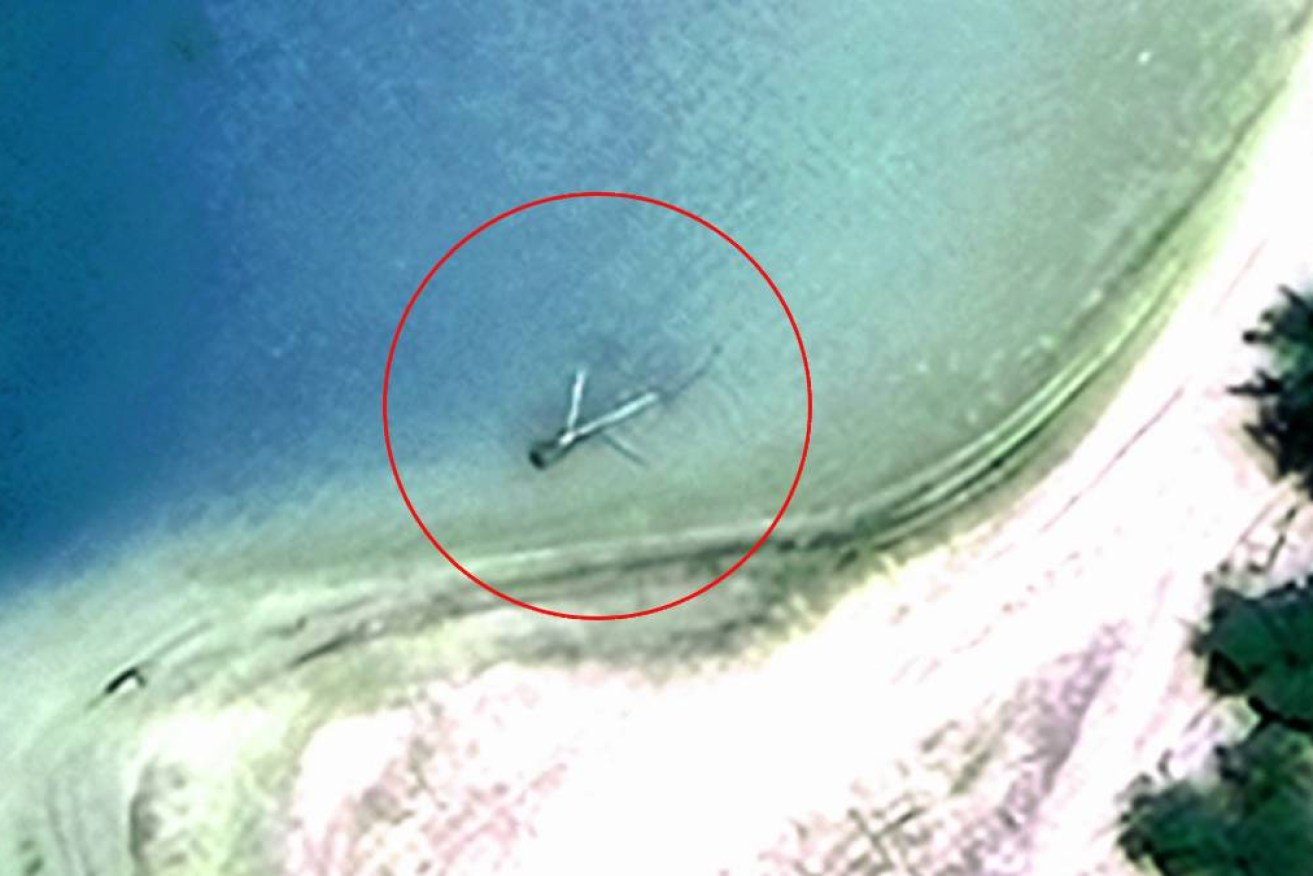
The Nikumaroro hypothesis is the most actively investigated and most evidentially supported alternative to the official crash-and-sank conclusion. It deserves a closer examination.
[FACT] The key pieces of evidence cited by TIGHAR and other Nikumaroro proponents include:
- The 1940 skeleton: British colonial officer Gerald Gallagher found partial human remains on Nikumaroro in 1940 along with a sextant box, a woman’s shoe, and other items. Contemporary measurements of the bones were assessed by a Fiji doctor as possibly female. The bones were sent to Fiji for analysis and subsequently lost. A 2018 forensic analysis of the surviving measurements assessed them as “more likely” to be Earhart’s than not — a finding disputed by other forensic anthropologists who argue the original measurements are too imprecise for reliable conclusions.
- The artifacts: Multiple expeditions to Nikumaroro by TIGHAR have recovered items including a zipper of a type used on women’s clothing in the 1930s, cosmetic jars, and other items potentially consistent with a 1930s American woman’s possessions. None of these items has been definitively linked to Earhart.
- The radio signals: Multiple witnesses reported receiving distress radio signals in the days after the disappearance, some of which have been analysed as potentially consistent with transmission from a grounded rather than ditched aircraft. These signals remain unverified.
- The 157-337 line: The sun line referenced in Earhart’s final transmission passes directly through Nikumaroro, providing a plausible navigation path that could have led the aircraft there.
[ANALYSIS] The Nikumaroro evidence is genuinely suggestive but not conclusive. Each individual piece of evidence is explicable by non-Earhart explanations. The cumulative weight of multiple lines of circumstantial evidence pointing to the same location is more compelling than any single piece — but it remains circumstantial. The definitive evidence — unambiguous wreckage of the Electra — has not been found despite multiple underwater surveys of the waters around Nikumaroro.
Recent Search Efforts
[FACT] In 2024 a deep-sea search expedition funded by technology entrepreneur Tony Seba and conducted by Deep Sea Vision used an autonomous underwater vehicle to survey an area of ocean floor near Howland Island. The survey produced a sonar image of an object on the ocean floor at approximately 5,000 metres depth whose shape bears some similarity to the Lockheed Electra’s outline. The image was widely reported but has not been confirmed as the Electra — the resolution and context of the sonar image do not allow definitive identification, and follow-up investigation to confirm or rule out the identification had not been completed as of mid-2025.
[FACT] TIGHAR continues to plan expeditions to Nikumaroro, with ongoing analysis of recovered artifacts and pursuit of the wreckage in the shallow reef waters around the island.
[ANALYSIS] The competing search efforts — one focused on the ocean near Howland Island consistent with the crash-and-sank hypothesis, one focused on Nikumaroro consistent with the castaway hypothesis — reflect the genuine scientific uncertainty about Earhart’s fate. If the Deep Sea Vision sonar contact is confirmed as the Electra, the official hypothesis would be vindicated. If TIGHAR finds confirmed wreckage at Nikumaroro, the castaway hypothesis would be established. Until one of these confirmations occurs, the mystery remains open.
Why Earhart’s Disappearance Still Matters
[ANALYSIS] Amelia Earhart’s disappearance matters beyond aviation history for several reasons. She was, at the time of her disappearance, one of the most famous people in the world — a symbol of what women could achieve in a profession dominated by men, and a figure whose death or fate had genuine public significance.
[ANALYSIS] The mystery also matters because it is genuinely solvable — unlike many historical mysteries, the physical evidence almost certainly still exists somewhere. Either the Electra lies on the ocean floor near Howland Island, recoverable with the right sonar and underwater technology, or it lies in the shallower waters near Nikumaroro. The answer is not lost to time — it is waiting to be found by the right search in the right location.
[FACT] The navigation and communication failures that led to Earhart’s disappearance directly influenced the development of aviation safety standards, navigation procedures, and radio communication protocols for overwater flight — making her disappearance one of the most consequential aviation accidents in terms of its lasting impact on the industry.
Conclusion
Amelia Earhart and Fred Noonan disappeared on July 2, 1937, somewhere in the central Pacific. The most likely explanation — supported by the official investigation and consistent with the known facts — is that they failed to locate Howland Island, ran out of fuel, and ditched in the ocean, where the aircraft sank rapidly in deep water.
The Nikumaroro hypothesis — that they found the 157-337 sun line, followed it southeast, and landed on an uninhabited coral island where they survived for some period before dying — is not proven but is supported by a body of circumstantial evidence that serious researchers consider worth investigating.
The Japanese capture theories and survival-and-new-identity claims are not supported by credible evidence and can be set aside.
The 2024 sonar contact near Howland Island is the most significant potential development in years — if confirmed as the Electra, it would close the case definitively in favour of the official hypothesis. If it proves to be something else, the search will continue.
Eighty-seven years after that final transmission, the answer is probably still out there — in 5,000 metres of Pacific water, or in the shallow reef around a small coral island in the Phoenix Islands. Earhart deserves to be found. With the technology now available, it may finally be possible.
Written and reviewed by the MysteryVerse editorial team. Facts sourced from the US Coast Guard Itasca radio logs (National Archives), Susan Butler’s East to the Dawn: The Life of Amelia Earhart (1997), TIGHAR’s published research reports, the 2018 forensic anthropology analysis of the Nikumaroro bone fragment (Forensic Anthropology journal), Deep Sea Vision’s 2024 expedition reports, and the US Navy’s official search documentation.
The Nikumaroro hypothesis is actively investigated by TIGHAR at tighar.org. The 2024 sonar contact near Howland Island is documented at deepseadiscovery.org.
Spotted an error? Contact us and we will correct it promptly.