Estimated read time: 12 minutes | Category: Unsolved Mysteries | Last updated: June 2025
The Word Carved Into the Post
On August 18, 1590, Governor John White finally returned to Roanoke Island after an absence of three years. The journey back had been a nightmare — delayed first by the war with Spain, then by storms, then by the dangers of Atlantic crossing — and White was desperate to reach the settlement he had left behind. Among the colonists were his daughter Eleanor and his granddaughter Virginia Dare, born on the island in 1587 as the first English child born in the Americas.
What he found when he reached the island was silence.
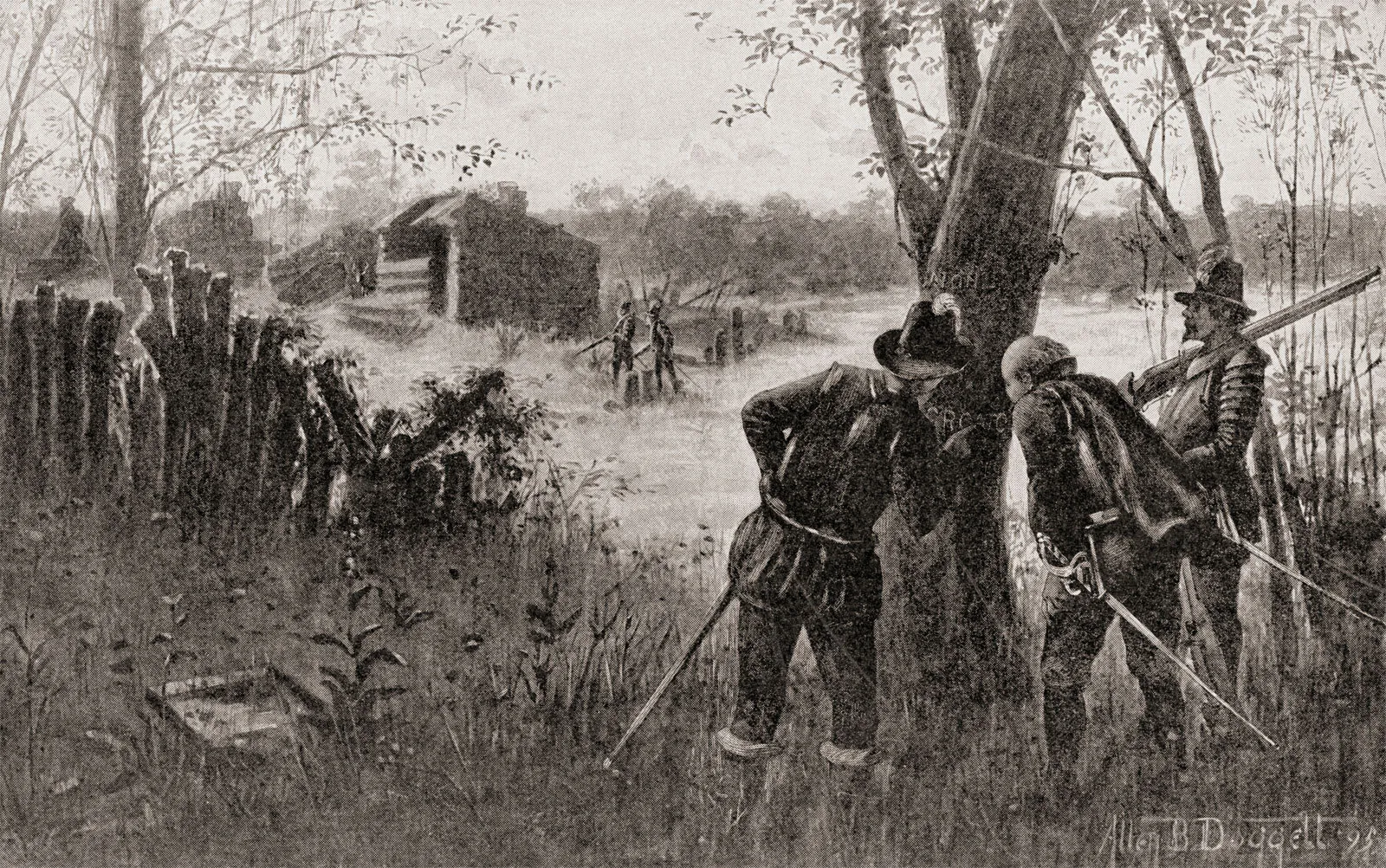
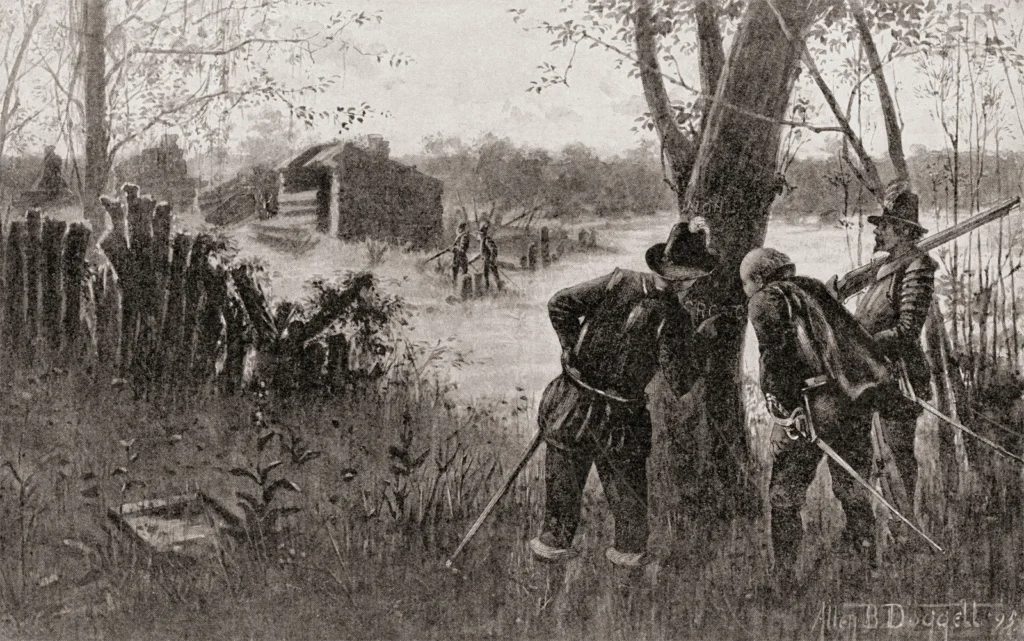
The settlement’s buildings had been dismantled. The palisade — a defensive fence — had been constructed around the former settlement site, suggesting some degree of organisation before departure. There were no bodies. There were no signs of battle. There was no indication of panic or violence. The colonists had not been massacred. They had simply — gone.
On one of the palisade posts, White found a single word carved into the wood: CROATOAN. On a nearby tree, the letters CRO. Before leaving, White and the colonists had agreed on a signal — if they moved from the settlement, they would carve the name of their destination. If they were in distress, they would add a cross. There was no cross.
Croatoan was the name of an island approximately 50 miles to the south, home to the Croatoan people, with whom the colonists had established friendly relations.
White was prevented from reaching Croatoan Island by storms and the demands of his ship’s crew. He returned to England. He never went back. And the fate of the 115 colonists — including his daughter and granddaughter — has never been definitively established in the 430 years since.
What We Know For Certain
- [FACT] The Roanoke Colony was England’s first attempt at a permanent settlement in the Americas, established on Roanoke Island off the coast of present-day North Carolina in 1587 under the sponsorship of Sir Walter Raleigh.
- [FACT] The colony consisted of 115 men, women, and children. Virginia Dare, born on August 18, 1587, was the first English child born in the Americas.
- [FACT] Governor John White sailed back to England in late 1587 to obtain supplies. His return was delayed three years by the Anglo-Spanish War, specifically England’s defence against the Spanish Armada in 1588.
- [FACT] When White returned in August 1590, the settlement was abandoned with no signs of violence. The word “CROATOAN” was carved on a palisade post and “CRO” on a nearby tree.
- [FACT] White had agreed with the colonists before his departure that they would carve a Maltese cross if they departed under duress. No cross was found.
- [FACT] White was unable to reach Croatoan Island due to storms and never returned to search for the colonists.
- [FACT] Archaeological work on Hatteras Island — the modern name for the area that includes the historic Croatoan territory — has recovered artifacts consistent with English colonial origin, though definitive confirmation of the Roanoke colonists’ presence remains elusive.
The Background — England’s First Colony
[FACT] England’s interest in establishing an American colony was driven partly by competition with Spain, which had established extensive and profitable settlements in the Caribbean and Central and South America since the late 15th century. Sir Walter Raleigh, granted a charter by Queen Elizabeth I to establish a colony, sponsored two expeditions to the Outer Banks of present-day North Carolina before the 1587 settlement attempt.
[FACT] A 1584 expedition explored the coastline and returned with two members of the Roanoke people — Manteo and Wanchese — who travelled to England. A 1585 military expedition established a temporary fort on Roanoke Island that was abandoned within a year due to food shortages and deteriorating relations with local indigenous peoples.
[FACT] The 1587 expedition was different in character — it included families, not just soldiers, and was intended as a permanent civilian settlement. John White, an artist who had participated in the 1585 expedition and produced detailed watercolour paintings of the indigenous peoples and natural environment, was appointed governor. The colonists arrived in late July 1587 at a location that had already been damaged by the previous military expedition’s poor relations with local people.
[FACT] Relations with the indigenous peoples were immediately complicated. One colonist — George Howe — was killed by an unidentified group shortly after arrival. Despite this inauspicious beginning, the colonists established friendly relations with Manteo’s Croatoan people and more hostile relations with several other groups in the region.
John White’s Departure and the Three-Year Gap
[FACT] Within weeks of the colony’s establishment, the settlers’ lack of supplies became critical. White was persuaded — reluctantly — to sail back to England to obtain provisions. He departed on August 27, 1587, leaving behind his daughter Eleanor (wife of colonist Ananias Dare), his newborn granddaughter Virginia, and 112 other colonists.
[FACT] White’s return was first delayed by the gathering threat of the Spanish Armada, which required all available English ships for national defence. He made one unsuccessful attempt to return in 1588, during which one of his ships was damaged in a confrontation with French pirates and forced to return to England.
[FACT] The Armada was defeated in August 1588, but White was unable to secure another resupply voyage until 1590 — three years after his departure. When he finally returned, he was travelling as a passenger on a privateering vessel whose captain was more interested in intercepting Spanish ships than delivering supplies to a colony.
[FACT] White arrived at Roanoke Island on August 18, 1590 — the third birthday of his granddaughter Virginia Dare, had she survived. He found the settlement dismantled, the palisade standing, and the two carved inscriptions. He searched the island but found no colonists, no bodies, and no further clues.
CROATOAN — What the Word Means
[FACT] Croatoan was the name used by the local Roanoke people for an island and people approximately 50 miles to the south — the island now known as Hatteras Island, part of the Outer Banks chain. The Croatoan people, led by Manteo (who had visited England), had maintained friendly relations with the colonists throughout the settlement’s existence.
[FACT] The carving, combined with the agreed-upon signalling system and the absence of a distress cross, strongly suggests the colonists moved voluntarily to Croatoan Island. White himself interpreted it this way — his writings describe his relief at finding the inscription and his confident belief that the colonists had gone to Croatoan.
[FACT] White was prevented from verifying this by a storm that threatened the ships. The captain refused to risk his vessel in the shallow waters around Croatoan Island in deteriorating weather. White was forced to return to England without making contact. He never returned to the Americas.
The Leading Theories
The most strongly supported theory — and the one most consistent with the carving — is that the colonists moved to Croatoan Island and were absorbed into the Croatoan community over the following years. This would have been a logical response to their circumstances: without supplies or hope of immediate rescue, integration with a friendly indigenous community offered the best chance of survival. [FACT] Archaeological work on Hatteras Island — the modern name for historic Croatoan territory — has recovered several artifacts of potential English colonial origin, including a 16th-century English signet ring discovered in 1998. The First Colony Foundation’s ongoing archaeological work has found additional evidence consistent with European presence at sites in the Croatoan territory, though definitive confirmation remains elusive.
A variation of the integration theory holds that some or all colonists moved to the mainland rather than to Croatoan Island — possibly to the territory of the Chesapeake people further north, which had been the intended destination of the original 1587 expedition before the ship’s pilot diverted to Roanoke. [FACT] When English colonists established Jamestown in 1607, they received multiple accounts from indigenous peoples of light-skinned people living among various tribes in the region, some of whom reportedly had European features or possessed European items. Chief Powhatan claimed to have ordered the massacre of a group of survivors from Roanoke who had been living with the Chesapeake people — though this account cannot be verified. The Jamestown accounts are secondhand and filtered through translation, making their reliability uncertain.
Some historians have proposed that some colonists may have attempted to sail back to England on a small vessel left by White’s 1587 expedition, and were lost at sea. This theory accounts for a possible split in the colony — some going to Croatoan, some attempting the Atlantic crossing. [SPECULATION] There is no documentary evidence for a sea crossing attempt, and the colonists were not experienced navigators. The Atlantic Ocean in a small 16th-century vessel was extraordinarily dangerous. Most researchers consider this scenario possible but unlikely as the fate of the majority of the colonists.
The long-standing popular account — that the colonists were massacred by hostile indigenous peoples — is inconsistent with the physical evidence. There were no bodies, no signs of battle, and no emergency cross on the palisade post. The dismantling of buildings suggests an orderly departure rather than an attack. Chief Powhatan’s claimed massacre account refers to the Chesapeake people’s killing of a group that may or may not have been Roanoke colonists, and may have occurred years after the colony’s founding. The massacre theory in its simple form is not well supported by the available evidence.
The Archaeological Evidence
[FACT] Archaeological investigation of the Roanoke mystery has accelerated significantly in the 21st century, with several organisations conducting systematic excavations at sites associated with the colony and the Croatoan people.
[FACT] The First Colony Foundation, a North Carolina-based non-profit organisation dedicated to investigating the Roanoke mystery, has conducted excavations at multiple sites on Hatteras Island (historic Croatoan territory). Their work has recovered artifacts including copper items, iron tools, and ceramic fragments of 16th-century European origin — though determining whether these specific items are connected to the Roanoke colonists or to other early European contact is methodologically challenging.
[FACT] In 2012, a patch on John White’s 1585-1587 map of the region — visible under X-ray analysis — revealed a hidden symbol at a location approximately 50 miles inland from Roanoke Island. The symbol, obscured by a patch that was part of the original map, appeared to be a fort symbol at a location on Albemarle Sound. This discovery prompted debate about whether some colonists may have moved to this inland location. Subsequent archaeological survey of the area has found some evidence of early European presence, though definitive connection to the Roanoke colonists has not been established.
[FACT] DNA research offers a potential future avenue for investigating the integration theory. Several communities in North Carolina have oral traditions of descent from the Roanoke colonists — most notably the Lumbee people. Genetic analysis comparing Lumbee ancestry with known European genetic markers from the 16th century could provide evidence relevant to the integration hypothesis, though such research raises significant ethical questions about indigenous community consent and the limitations of genetic analysis for historical attribution.
Virginia Dare — The First American
[FACT] Virginia Dare — baptised on August 24, 1587, on Roanoke Island, daughter of Ananias and Eleanor Dare and granddaughter of Governor John White — holds a unique place in American history as the first English child born in the Americas. Her fate, like that of all the colonists, is unknown.
[FACT] Virginia Dare became a significant cultural figure in American mythology — the subject of poems, plays, novels, and artistic representations from the 19th century onward. She has been portrayed as everything from a tragic victim to a symbolic founding figure, her story taking on different meanings in different historical contexts.
[ANALYSIS] The persistence of Virginia Dare as a cultural symbol reflects something important about the Roanoke mystery — it is not just a historical puzzle but an origin story without an ending. The first English child born in America, granddaughter of the man who searched for her without success, is a figure whose fate embodies all the uncertainty and loss of the colony’s disappearance. Whether she died in infancy, was raised by the Croatoan people, or survived into adulthood as part of an indigenous community — her story remains open in a way that makes it permanently compelling.
Why the Mystery Has Never Been Solved
The Roanoke mystery has proven so persistent partly because of genuine evidentiary challenges and partly because of the circumstances of its investigation.
- The three-year gap: The most critical period — between White’s departure and his return — produced no direct evidence. Whatever happened occurred in a remote location with no European witnesses.
- The destruction of potential evidence: Subsequent European settlement of the region, particularly from the 17th century onward, has disturbed many sites that might have yielded direct evidence of the colonists’ presence or fate.
- The indigenous oral tradition gap: The Croatoan people’s own accounts of the period were never systematically recorded by early European colonists, and later accounts are filtered through multiple layers of translation and cultural mediation.
- The complexity of integration: If the colonists were absorbed into indigenous communities, their material remains would be largely indistinguishable from indigenous material culture within a generation, making archaeological identification extremely difficult.
- The remoteness of the site: Roanoke Island and the Outer Banks were physically difficult to access for early investigators, and systematic archaeological work only began in earnest in the 20th century.
Conclusion
One hundred and fifteen people arrived on Roanoke Island in the summer of 1587. They built homes, established a community, baptised the first English child born in the Americas, and waited for Governor White to return with supplies. They waited for three years. Then they left — apparently voluntarily, apparently in some order, apparently toward Croatoan.
The evidence points most strongly toward integration with the Croatoan people and possibly other indigenous communities in the region. This is not a dramatic conclusion — it does not involve massacre, supernatural disappearance, or exotic explanation. It is the story of a group of people in desperate circumstances making the rational choice to seek survival among the people who could actually help them.
But the evidence is not conclusive. The archaeological work continues. The DNA research has not been done. The hidden symbol on White’s map has not been fully investigated. The oral traditions of the Lumbee and other communities have not been systematically documented with full community consent and scientific rigour.
The answer is probably in the soil of coastal North Carolina — in the genetic record of communities who have lived in the region for four centuries, in the artifacts buried at sites that have not yet been excavated, in the traces of a 16th-century English community that chose to become something else rather than die waiting for a rescue that never came.
CROATOAN. The word is there. The people who carved it are still waiting to be found.
Written and reviewed by the MysteryVerse editorial team. Facts sourced from John White’s original journals (published in Richard Hakluyt’s Principal Navigations, 1600), the First Colony Foundation’s published archaeological reports, the British Museum’s collection of John White’s watercolours and maps, and peer-reviewed historical research including David Beers Quinn’s Set Fair for Roanoke (1985) and Lee Miller’s Roanoke: Solving the Mystery of the Lost Colony (2000).
The First Colony Foundation continues active archaeological investigation of the Roanoke mystery. Their findings are published at firstcolonyfoundation.org.
Spotted an error? Contact us and we will correct it promptly.