Estimated read time: 11 minutes | Category: Unsolved Mysteries | Last updated: June 2025
The Night the Mountain Swallowed Nine People
On the night of February 1–2, 1959, something caused nine experienced Soviet mountaineers to tear open their tent from the inside, flee into minus 30°C temperatures without proper clothing, and die in ways that investigators could not explain. No avalanche was recorded. No enemy was found. No rational explanation satisfied everyone.
Sixty-five years later, the Dyatlov Pass incident remains one of the most analysed, debated, and genuinely unexplained events of the 20th century — not because of a lack of evidence, but because the evidence itself is so deeply strange.
What We Know For Certain
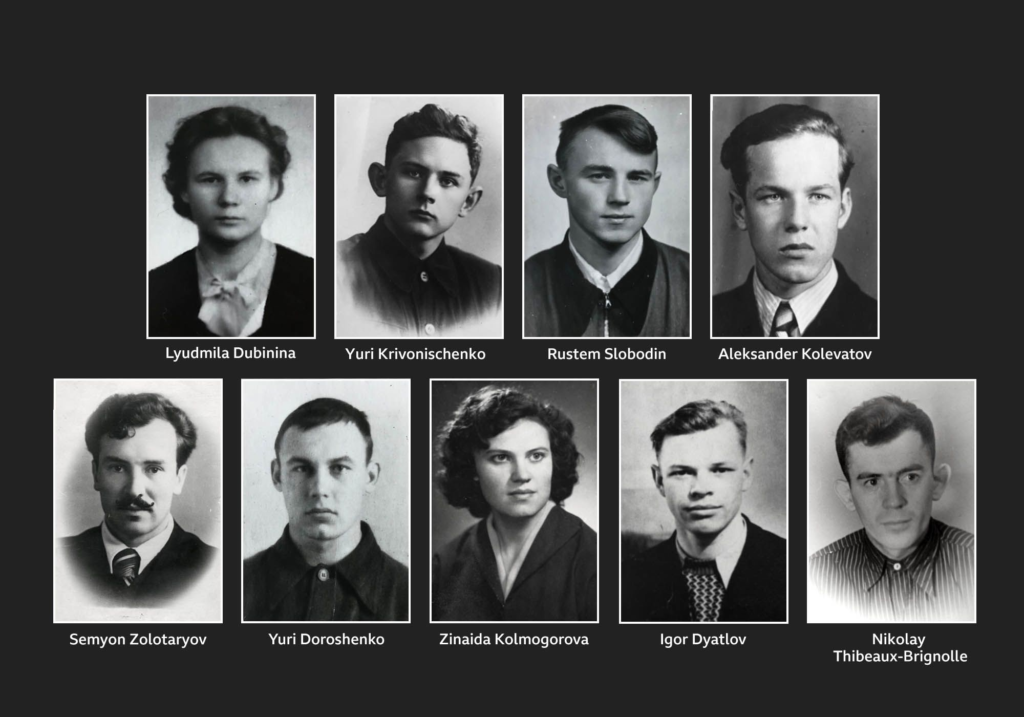
- [FACT] The group consisted of nine students and graduates of the Ural Polytechnical Institute, led by 23-year-old Igor Dyatlov.
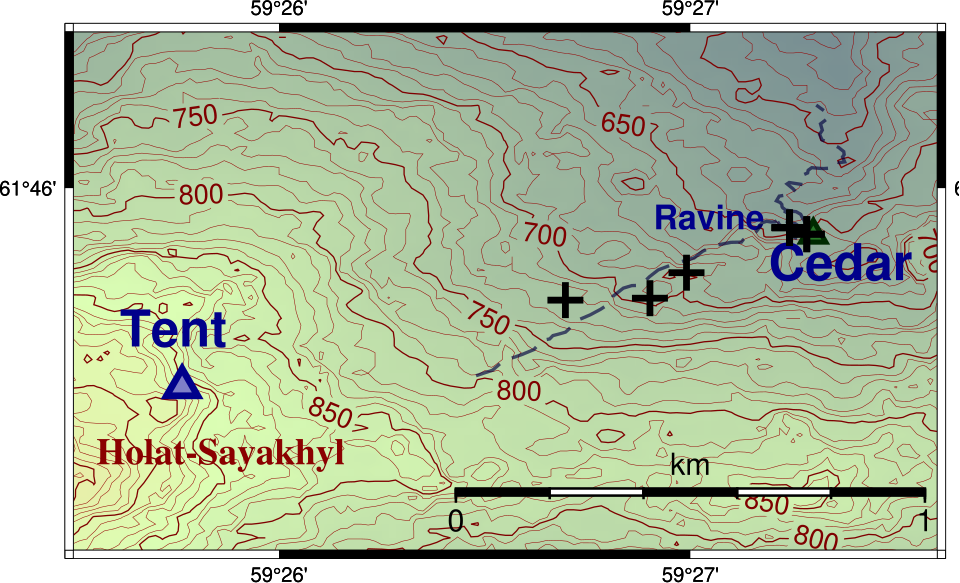
- [FACT] They set up camp on the slope of Kholat Syakhl on the evening of February 1, 1959.
- [FACT] Their tent was found cut open from the inside. All nine had fled on foot into the snow without adequate clothing or footwear.
- [FACT] Six died from hypothermia. Three died from severe physical trauma — broken ribs, a crushed skull, and in one case, a missing tongue.
- [FACT] The injuries in three victims were described by the medical examiner as comparable to the force of a car crash, yet there were no external wounds.
- [FACT] Some clothing tested positive for low-level radioactivity.
- [FACT] Soviet authorities closed the investigation in May 1959, declaring the cause of death “an unknown compelling force.” Files were classified for decades.
The Group
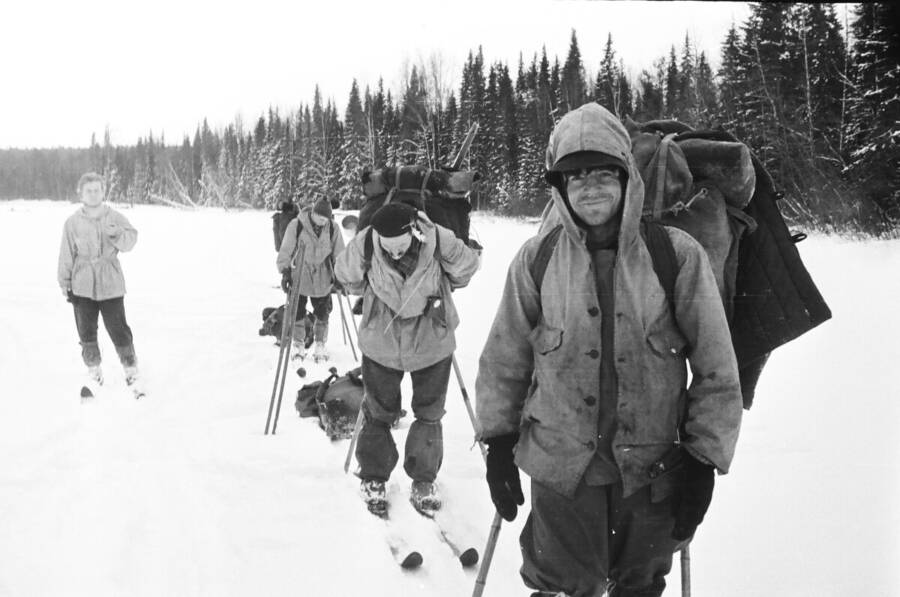
Igor Dyatlov’s team was not a group of inexperienced thrill-seekers. They were fit, trained, and had completed multiple difficult winter expeditions before. The youngest was 20. The oldest was 38-year-old Alexander Zolotaryov, a World War II veteran who had joined the group at the last minute — a detail that has fuelled suspicion ever since.
[FACT] Their goal was to reach Mount Otorten, a Grade III difficulty winter route. They were on schedule and in good spirits. Their diaries and photographs, recovered later, show a group that was organised, cheerful, and methodical up until their final camp.
Whatever happened, it happened fast. Fast enough that they did not stop to put on boots.
The Discovery
[FACT] When the group failed to return on schedule, a search party was dispatched. On February 26, rescuers found the abandoned tent, partially buried in snow, slashed open from within. Footprints — some in socks, some barefoot — led down the slope toward the treeline.
The first two bodies were found near the remains of a small fire at the forest edge. They were in their underwear. [FACT] Three more bodies were found between the forest and the tent, in postures suggesting they were trying to return to camp. The remaining four were not found until May, buried under four metres of snow in a ravine.
It was the ravine victims that changed everything. [FACT] Lyudmila Dubinina had suffered two broken ribs and was missing her tongue, eyes, and parts of her lips. Nicolas Thibeaux-Brignollel had a fractured skull. Semyon Zolotaryov had broken ribs on both sides. The medical examiner stated the force required was extreme — yet the skin showed no corresponding external injuries.
The Investigation and Its Failures
[FACT] Soviet investigators interviewed witnesses, examined the bodies, and ultimately concluded only that the hikers had died from “an unknown compelling force.” The case was closed. Files were classified. Families were told very little.
This official silence became, for many, the most suspicious detail of all. [SPECULATION] Some have argued the Soviet government knew exactly what happened and chose to bury it — whether to conceal a weapons test, a military experiment, or something else entirely.
What is documented: military investigators were involved in the search, some clothing showed traces of radioactive contamination, and locals from the Mansi indigenous people reported seeing orange spheres of light in the sky around the time of the deaths. [FACT] Soviet military personnel also reported unusual light phenomena in the area during February and March 1959.
The Leading Theories
The most scientifically favoured explanation in recent years. A 2021 study by Swiss researchers used computer modelling to show that a specific type of small, delayed slab avalanche — triggered by the way the hikers cut into the slope to pitch their tent — could have caused the injuries and the panicked flight. Critics note that no avalanche debris was found by rescuers, and that experienced hikers would have known not to camp in an avalanche-prone position.
A sudden violent downslope wind could have caused the tent to collapse with terrifying force, triggering panic. Some researchers propose that infrasound — low-frequency sound waves produced by wind over mountain ridges — can cause extreme anxiety and even hallucinations, driving the group to flee irrationally. [SPECULATION] This theory remains highly speculative and has never been proven in a controlled setting.
The radioactive contamination, the light phenomena, the military involvement, and the rapid classification of files have led many researchers to suspect a Soviet weapons test — possibly a parachute mine or fuel-air explosive — went wrong near the group’s camp. [SPECULATION] There is no direct evidence for this, but the circumstantial pattern is difficult to dismiss entirely.
In advanced hypothermia, victims sometimes experience a sensation of burning heat and tear off their clothing — a documented medical phenomenon. This could explain why some hikers were found nearly undressed. However, it does not explain the catastrophic internal injuries.
The Mansi people called Kholat Syakhl “the mountain of the dead.” Various paranormal explanations have circulated for decades. These are not supported by any physical evidence and are included here only because they form part of the cultural story around this case.
The Most Likely Explanation
The honest answer is that no single theory explains every detail. The avalanche hypothesis — refined by the 2021 Swiss study — is the most scientifically grounded explanation for the injuries and the flight from the tent. [THEORY] It is plausible that a small slab avalanche struck the tent, caused panic and some injuries, and the group fled in darkness and extreme cold, making increasingly desperate decisions as hypothermia set in.
What it does not cleanly explain: the radioactive contamination, the missing soft tissue on Dubinina’s body, and the classified military involvement.
The most likely truth is probably mundane and tragic — a natural event, made strange by Soviet secrecy, decades of speculation, and details that no single explanation fully accounts for.
Why This Still Matters
The Dyatlov Pass incident is a case study in how official silence creates permanent distrust. Had the Soviet government been transparent in 1959, the theories might never have multiplied. Instead, the classification of files and the vague official conclusion guaranteed the case would never feel closed.
In 2019, Russia reopened the investigation. In 2020, prosecutors announced their conclusion: an avalanche. Most researchers remained unsatisfied. The families of the victims have never accepted it.
[FACT] The mountain pass was officially renamed Dyatlov Pass in honour of the group’s leader. It remains a hiking destination — and a place of pilgrimage for those still searching for answers.
Conclusion
Nine people went into the Ural Mountains in February 1959 and did not come back. The evidence is real, documented, and deeply strange. The explanations are plausible but incomplete.
The Dyatlov Pass incident endures not because it is supernatural, but because it sits at the intersection of genuine mystery, institutional secrecy, and human tragedy. It is a reminder that “we don’t know” is sometimes the most honest answer available — and that honest uncertainty is far more interesting than false certainty in either direction.
Written and reviewed by the MysteryVerse editorial team. All facts are sourced from documented historical records. Theories and speculation are clearly labelled throughout. If you spot an error, contact us and we will correct it promptly.