Estimated read time: 13 minutes | Category: Science Mysteries | Last updated: June 2025
The Conspiracy That Will Not Die
On July 20, 1969, Neil Armstrong became the first human being to set foot on the Moon. The moment was watched live by an estimated 600 million people — roughly one fifth of humanity at the time. It was the culmination of a decade of effort, the achievement of a goal set by a president who had not lived to see it, and one of the defining moments of the 20th century.
And according to a persistent and surprisingly widespread belief, none of it happened.
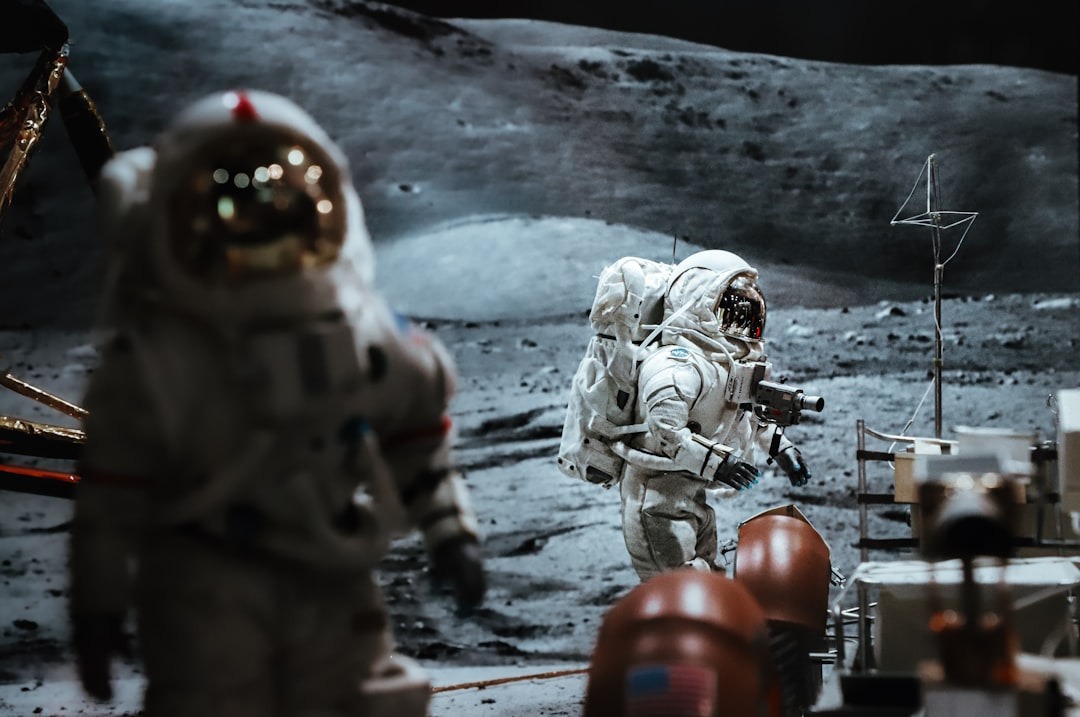
The conspiracy theory holds that the Apollo moon landings — all six successful ones, between 1969 and 1972 — were elaborate hoaxes, staged by NASA on a film set, possibly directed by Stanley Kubrick, to win the Space Race against the Soviet Union and justify the programme’s enormous cost. The flag waves in a vacuum. The stars are missing from the photographs. The radiation would have killed the astronauts. The shadows fall at impossible angles. The technology did not exist.
These claims have been circulating since 1976, when Bill Kaysing self-published a book titled We Never Went to the Moon. They have never gone away.
Here is every major hoax claim — examined against the actual evidence.
What We Know For Certain
- [FACT] NASA’s Apollo programme successfully landed humans on the Moon six times between July 1969 and December 1972. Twelve astronauts walked on the lunar surface.
- [FACT] The Soviet Union — NASA’s primary rival in the Space Race and with every geopolitical incentive to expose a hoax — tracked the Apollo missions independently and never disputed their authenticity.
- [FACT] Apollo missions returned 842 pounds (382 kg) of lunar rock and soil samples. These samples have been studied by scientists in dozens of countries and are geologically distinct from any Earth rock — consistent with formation in a low-gravity, airless environment.
- [FACT] Retroreflectors — laser ranging devices — placed on the lunar surface by Apollo astronauts are still in use today. Scientists worldwide bounce lasers off them to measure the precise distance to the Moon.
- [FACT] Approximately 400,000 people worked on the Apollo programme across NASA and its contractors. No credible whistleblower has ever come forward claiming the landings were faked.
- [FACT] Stanley Kubrick, frequently cited as the director of the alleged hoax footage, consistently denied any involvement in faking moon landings. His daughter Vivian Kubrick has publicly and forcefully rejected the theory.
- [FACT] Independent tracking of the Apollo missions was conducted by observatories in multiple countries including the UK, Australia, and — most significantly — the Soviet Union.
The Hoax Claims — Examined One by One
Claim 1 — The Flag Was Waving in a Vacuum
The claim: In footage of the moon landings, the American flag appears to wave and ripple — impossible in the vacuum of the Moon where there is no air to move it.
The evidence: [FACT] The flag was not waving in the wind. NASA specifically designed the lunar flag with a horizontal rod sewn along the top to keep it extended, since it would otherwise hang limp in the absence of atmosphere. When the astronauts planted the flag, they rotated it into the ground — and this rotation caused the flag to swing and ripple on its rod. With no air resistance to dampen the motion, it continued oscillating for longer than it would on Earth. If you watch the footage carefully, the flag only moves when the astronauts touch it. Between touches, it is completely still — exactly as it would be in a vacuum.
Claim 2 — There Are No Stars in the Photographs
The claim: The Apollo photographs show no stars in the lunar sky, which should be perfectly black and filled with stars since the Moon has no atmosphere to scatter light.
The evidence: [FACT] This is a basic misunderstanding of photography. The Apollo photographs were taken on the lunar surface in daylight — with a brilliantly lit lunar surface and brightly lit astronauts in white suits as the primary subjects. To expose correctly for these bright subjects, the camera aperture and shutter speed were set to handle bright light. Under these settings, the much dimmer stars are simply not bright enough to register on film — exactly as they would not be in any daytime photograph taken on Earth. You cannot photograph a bright scene and a dark scene simultaneously with a single camera exposure. The stars were there. The camera settings that produced correctly exposed photographs of the astronauts made them invisible.
Claim 3 — The Van Allen Radiation Belt Would Have Killed the Astronauts
The claim: The Van Allen radiation belts — zones of intense radiation surrounding Earth — would have delivered a lethal radiation dose to the Apollo astronauts.
The evidence: [FACT] The Apollo missions were planned specifically to minimise radiation exposure from the Van Allen belts. The trajectory was designed to pass through the thinner parts of the belts as quickly as possible — the transit took approximately 30 minutes each way. The total radiation dose received by Apollo astronauts from the belts was significant but not lethal — roughly equivalent to several chest X-rays. NASA’s radiation monitoring data from the missions is publicly available. The Apollo astronauts received higher radiation doses than Earth-bound humans but doses well within survivable limits. Modern dosimetry confirms this.
Claim 4 — The Shadows Fall at Wrong Angles — Proving Multiple Light Sources
The claim: In several Apollo photographs, shadows appear to fall in different directions, which would be impossible with a single light source — the Sun — proving that multiple studio lights were used.
The evidence: [FACT] Shadows on uneven terrain do not all fall in the same direction even with a single light source — this is easily observable on Earth. When a shadow falls across a slope or a rock, its apparent direction changes. Additionally, the lunar surface reflects significant light — acting as a secondary diffuse light source that fills in shadowed areas and affects the apparent direction of shadows in photographs. Professional photographers and lighting experts who have analysed the Apollo photographs have consistently confirmed the shadow directions are consistent with a single solar light source on uneven terrain, with reflected light from the surface.
Claim 5 — The Astronauts Could Not Have Survived the Temperature Extremes
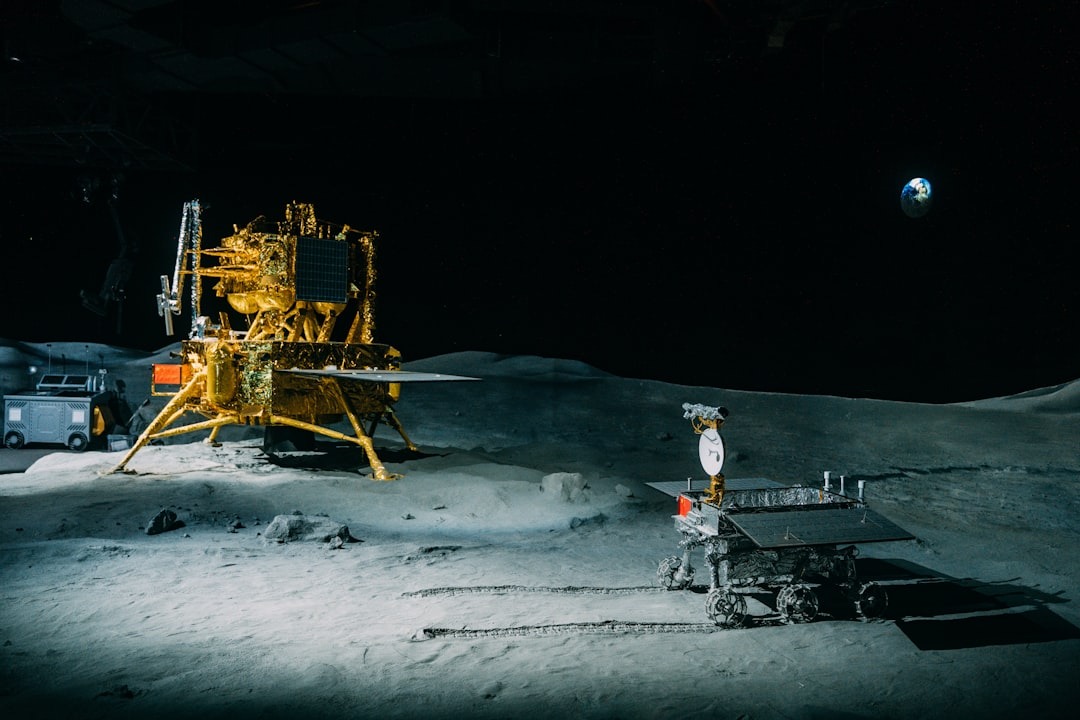
The claim: Temperatures on the lunar surface range from -173°C in shadow to +127°C in sunlight — conditions no spacesuit could handle.
The evidence: [FACT] The Apollo spacesuits were specifically engineered to handle exactly these temperature extremes through multiple layers of insulation, reflective material, and an internal water-cooled undergarment that regulated astronaut body temperature. The suits were tested extensively before flight and performed as designed. The technology to build such suits — challenging but achievable with 1960s engineering — is thoroughly documented in NASA’s engineering records.
Claim 6 — The Footage Was Too Perfect for 1969 Technology
The claim: The quality and consistency of the Apollo footage was beyond what 1969 technology could achieve — proving it was filmed in a studio.
The evidence: [FACT] The Apollo footage is frequently criticised by conspiracy theorists for being too good. It is also frequently criticised for being too bad — shaky, low resolution, and poorly lit. Both criticisms cannot simultaneously be valid. The footage quality is exactly consistent with the cameras used — specifically designed for the mission — under the lighting conditions of the lunar surface. Film analysts who have studied the footage have noted numerous features that would be extraordinarily difficult or impossible to fake — including the consistent behaviour of dust in the lunar vacuum, which moves in perfect parabolic arcs with no air resistance, exactly as physics predicts.
Claim 7 — The Stanley Kubrick Connection
The claim: Stanley Kubrick — who directed 2001: A Space Odyssey in 1968 and had demonstrated the ability to create convincing space environments on film — was recruited by NASA to direct the faked moon landing footage. Some versions of the theory hold that Kubrick encoded a confession in his 1980 film The Shining.
The evidence: [FACT] Kubrick consistently and explicitly denied any involvement in faking moon landings throughout his life. His daughter Vivian Kubrick issued a detailed public statement rejecting the theory as an insult to her father’s memory and to the astronauts who risked their lives. The supposed confessions encoded in The Shining — room 237, the Apollo 11 sweater worn by Danny — are interpretive readings of a horror film that require significant motivated reasoning to produce. No documentary evidence of any connection between Kubrick and NASA’s Apollo footage has ever been produced.
The Most Powerful Evidence the Landings Were Real
The Soviet Union Would Have Exposed a Hoax
[FACT] The Soviet Union had every geopolitical reason to expose the Apollo landings as a hoax if they were one. The Space Race was a central front in the Cold War. The Soviets independently tracked the Apollo spacecraft across their journey to the Moon using their own ground stations. They monitored radio transmissions. They had deep-cover intelligence assets inside the United States defence and space establishment.
[FACT] The Soviet Union never disputed the authenticity of the Apollo landings. Soviet scientists congratulated their American counterparts. Soviet media covered the landings. The USSR — which would have gained enormous propaganda advantage from exposing a hoax — accepted the landings as genuine.
[ANALYSIS] This is perhaps the single most powerful argument against the hoax theory. A conspiracy capable of fooling 600 million television viewers would need to be airtight enough to also fool the most sophisticated intelligence apparatus in the world — one with every incentive to find and expose any weakness. It was not exposed.
The Lunar Samples
[FACT] The 842 pounds of lunar rock returned by Apollo missions have been studied by scientists in more than 100 countries. The samples are geologically unlike any Earth rock — they formed in a low-gravity, airless, waterless environment, show bombardment patterns consistent with the lunar surface, and contain isotopic signatures impossible to replicate on Earth.
[FACT] NASA shared lunar samples with the Soviet Union as part of a scientific exchange. Soviet geologists studied them and confirmed they were of lunar origin.
The Retroreflectors
[FACT] Laser ranging retroreflectors placed on the lunar surface during Apollo missions 11, 14, and 15 have been used continuously since their installation. Scientists at observatories around the world — including non-American institutions — regularly bounce laser pulses off these reflectors and measure the return time to calculate the precise Earth-Moon distance. The reflectors are there. They work. You can verify this yourself by contacting any of the dozens of observatories that use them.
The Scale Problem — Why the Conspiracy Cannot Work
The moon landing hoax theory requires accepting that approximately 400,000 people — engineers, scientists, technicians, contractors, and astronauts across dozens of organisations — successfully maintained a total conspiracy for over fifty years, with not a single credible whistleblower coming forward.
[FACT] Physicist David Grimes published a peer-reviewed paper in 2016 mathematically modelling the likelihood of large conspiracies remaining secret over time. His analysis, based on known historical conspiracy leaks, found that a conspiracy involving 400,000 people would have a 50% chance of being exposed within 3.7 years. For it to remain secret for fifty-plus years, the probability approaches zero.
[ANALYSIS] This does not mean large conspiracies never exist. It means they tend to leak — through whistleblowers, deathbed confessions, document releases, and accidental disclosures. A conspiracy involving 400,000 people that has remained completely airtight for over fifty years, with not a single credible insider account of the hoax, is not plausible under any realistic model of human behaviour and institutional secrecy.
Why Do People Believe It?
The persistence of the moon hoax theory — despite the overwhelming weight of evidence against it — reflects several genuine psychological and social dynamics:
- Distrust of government and institutions: The Apollo landings occurred during a period of significant government dishonesty — the Vietnam War, COINTELPRO, the beginnings of Watergate. Public trust in official narratives was eroding with good reason.
- The achievement seems impossible: The sheer audacity of travelling 384,000 kilometres to another world, landing, walking on the surface, and returning safely — with 1960s technology — genuinely strains credulity. It is easier to believe it was faked than to believe it actually happened.
- The Dunning-Kruger dynamic: Enough genuine scientific language surrounds the hoax claims — radiation belts, camera exposures, shadow angles — to make them feel technically sophisticated. For people without physics backgrounds, it can be difficult to evaluate these claims without doing significant research.
- The internet amplification effect: Hoax content is more emotionally engaging than debunking content. Conspiracy theories spread faster and further than refutations on social media platforms optimised for engagement.
Conclusion
The moon landings happened. This is not a matter of genuine scientific controversy.
Every major hoax claim — the waving flag, the missing stars, the radiation, the shadows, the temperature, the footage quality — has a straightforward scientific explanation that requires no conspiracy to account for. The evidence that the landings occurred — the Soviet tracking, the lunar samples, the retroreflectors, the 400,000-person workforce, the absence of any credible whistleblower — is overwhelming and independently verifiable.
What is genuinely interesting about the moon hoax theory is not the claims themselves — they do not survive scrutiny — but what their persistence tells us about distrust of institutions, the psychology of conspiracy belief, and the way emotionally compelling false narratives can outcompete accurate ones in the media environment.
Twelve human beings walked on the Moon. Their footprints are still there — the lunar surface has no wind or rain to erase them. The retroreflectors they placed are still bouncing lasers back to Earth. The rocks they carried home are still being studied in laboratories around the world.
We went. We came back. And the evidence has been sitting in plain sight ever since.
Written and reviewed by the MysteryVerse editorial team. Facts sourced from NASA technical documentation, published NASA history archives, David Grimes’s conspiracy persistence paper (PLOS ONE, 2016), lunar sample analysis from the Lunar and Planetary Institute, and independent verification from the Apache Point Observatory Lunar Laser-ranging Operation (APOLLO).
NASA’s Apollo image library is publicly available at images.nasa.gov — all photographs are public domain. The lunar retroreflector ranging programme is documented at the International Laser Ranging Service (ilrs.gsfc.nasa.gov).
Spotted an error? Contact us and we will correct it promptly.