Estimated read time: 13 minutes | Category: Corporate Scandals | Last updated: June 2025
The Ship That Should Not Have Sunk
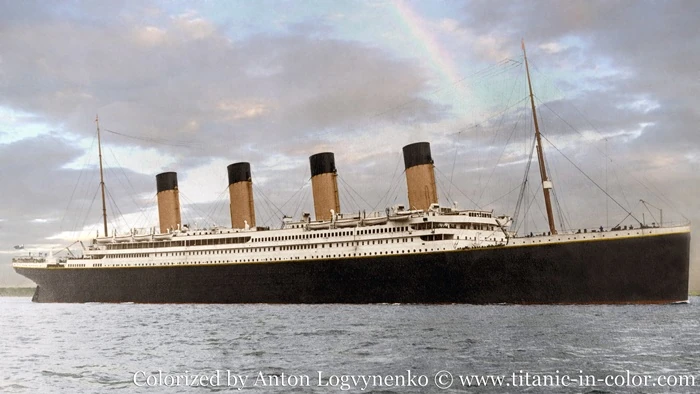
Everyone knows the Titanic story. The largest, most luxurious ship ever built. The iceberg. The lifeboats. The band playing on as the ship went down. 1,517 people dead in the freezing North Atlantic. The most famous maritime disaster in history.
But what if the ship that sank on April 15, 1912 was not the Titanic?
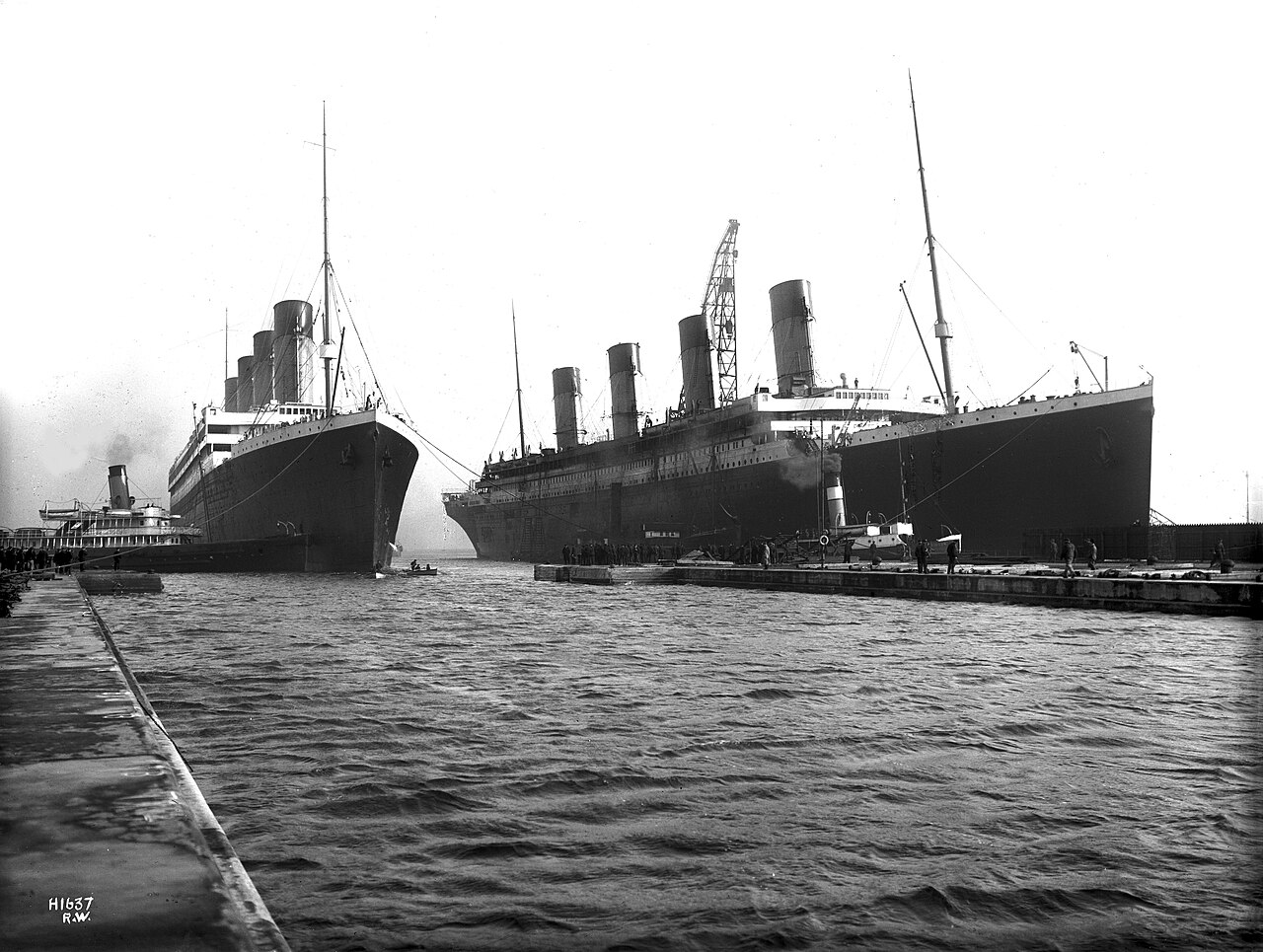
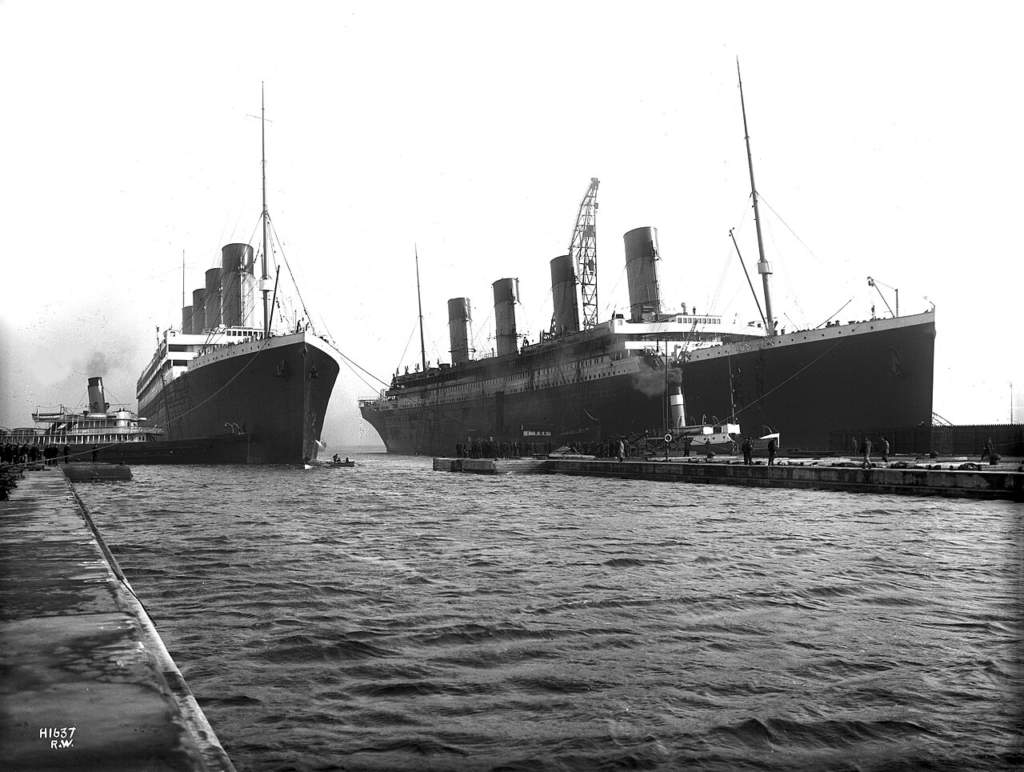
The Olympic switch theory — one of the most elaborate and disturbing conspiracy theories ever constructed around a real historical event — proposes that White Star Line, the company that built and operated both ships, secretly swapped the Titanic and her older, damaged sister ship the Olympic before the fatal voyage. The plan, according to the theory, was to sail the battered Olympic — disguised as the new, fully insured Titanic — into a controlled sinking in the North Atlantic and collect the insurance money.
The plan went wrong. The ship sank faster than expected. The rescue ship arrived too late. And 1,517 people died not in a tragic accident, but as the victims of an insurance fraud gone catastrophically wrong.
It is a remarkable theory. Here is the evidence for it — and the substantial evidence against it.
What We Know For Certain
- [FACT] RMS Titanic and RMS Olympic were sister ships built at Harland and Wolff shipyard in Belfast, nearly identical in external appearance and internal layout. Olympic was launched in October 1910, Titanic in May 1911.
- [FACT] In September 1911, the Olympic was involved in a serious collision with the Royal Navy cruiser HMS Hawke. The collision caused significant damage to the Olympic’s hull and propeller shaft. The subsequent insurance claim was partially rejected — the inquiry ruled Olympic was at fault.
- [FACT] The Titanic was insured for £1,000,000 — approximately £125 million in today’s values. The Olympic, after the Hawke collision, had reduced insurance value and was causing financial strain for White Star Line and its owner, JP Morgan’s International Mercantile Marine Company.
- [FACT] JP Morgan, who owned White Star Line, cancelled his booking on the Titanic’s maiden voyage at the last minute, citing illness. He was photographed in good health in France the day after the sinking.
- [FACT] The wreck of the ship that sank has been explored extensively since its discovery by Robert Ballard in 1985. Physical evidence from the wreck has been analysed in detail.
- [FACT] The Olympic switch theory was most prominently advanced by Robin Gardiner in his 1998 book Titanic: The Ship That Never Sank.
- [FACT] Multiple independent maritime historians and forensic analysts have examined the switch theory and found it unpersuasive based on the physical evidence from the wreck.
The Background — Two Ships, One Problem
[FACT] White Star Line commissioned three Olympic-class ocean liners from Harland and Wolff in Belfast: Olympic, Titanic, and Britannic. They were the largest ships ever built at the time — over 882 feet long, displacing 46,000 tons, capable of carrying over 2,000 passengers.
[FACT] Olympic entered service first in June 1911 and was immediately profitable and celebrated. Then came the Hawke collision in September 1911 — a serious accident that put Olympic out of service for repairs and created a significant insurance dispute. The British inquiry found Olympic primarily at fault, substantially reducing White Star Line’s insurance recovery.
[FACT] White Star Line was owned by JP Morgan’s International Mercantile Marine Company and was under significant financial pressure. The cost of building the Olympic-class liners was enormous. The Hawke collision had compounded financial strain. The company needed the ships to be profitable — and a badly damaged Olympic was not.
[ANALYSIS] This financial context — genuine, documented, and significant — is the foundation on which the switch theory is built. White Star Line had a real financial motive for wanting the damaged Olympic replaced by an insurance payout. Whether that motive translated into action is an entirely separate question.
The Evidence for the Switch Theory
The Physical Similarities
[FACT] Olympic and Titanic were extraordinarily similar. They were built to the same design, in adjacent berths, by the same workforce. Contemporary photographs show the ships were visually almost indistinguishable. Workers at Harland and Wolff reportedly could not reliably tell them apart from external inspection alone.
[THEORY] Switch theory proponents argue this similarity made a swap physically feasible. If the ships’ workers could not easily distinguish them, neither would passengers, journalists, or customs officials inspecting the vessel before departure.
The JP Morgan Cancellations
[FACT] JP Morgan cancelled his Titanic booking days before departure, citing health concerns. He was seen in good health at a French spa the following day. Several other wealthy and well-connected individuals also cancelled bookings at the last minute — including Milton Hershey of the Hershey chocolate company and Alfred Gwynne Vanderbilt.
[THEORY] Switch theory proponents suggest these cancellations — particularly Morgan’s — indicate foreknowledge of the planned sinking. If insiders knew the ship was going to be deliberately lost, they would arrange to be absent.
The Lifeboat Shortage
[FACT] The Titanic carried lifeboats sufficient for only approximately 1,178 people — about half its capacity — despite carrying over 2,200 passengers and crew. This was legal under existing regulations but widely criticised after the disaster.
[THEORY] Some switch theory proponents argue the lifeboat shortage was intentional — that a controlled insurance sinking was supposed to involve a nearby rescue ship collecting survivors, making full lifeboat capacity unnecessary. When the plan went wrong and the rescue ship arrived too late, the lifeboat shortage became catastrophic.
The Californian
[FACT] The SS Californian — a ship owned by a company connected to JP Morgan’s International Mercantile Marine — was stopped in the ice field approximately 20 miles from the Titanic when it sank. The Californian’s crew saw rockets fired from the stricken ship but did not respond. Captain Stanley Lord was later heavily criticised for this failure to act and faced a Board of Trade inquiry.
[THEORY] Switch theory proponents argue the Californian was intended to be the rescue ship for the planned controlled sinking — positioned nearby to collect survivors after the Olympic/Titanic went down in a controlled manner. When the ship sank faster and more catastrophically than planned, the Californian’s crew was paralysed by confusion and the scale of the disaster.
The Evidence Against the Switch Theory
The evidence against the Olympic switch theory is substantial — and in several areas, forensic rather than circumstantial.
The Wreck Evidence
Since Robert Ballard’s discovery of the wreck in 1985, the ship on the ocean floor has been examined in detail by multiple independent teams. Several features of the wreck are specific to Titanic rather than Olympic — including the configuration of the B-deck promenade (enclosed on Titanic, open on Olympic), specific cabin configurations that were different between the two ships, and port-side portholes whose spacing matches Titanic’s layout rather than Olympic’s. These differences — established from builders’ specifications and contemporary photographs — are present in the wreck and are consistent with it being the Titanic. Switch theory proponents have disputed some of these findings, but the consensus among maritime historians and forensic analysts is that the wreck is the Titanic.
The Hull Numbers
Every major component of a ship built at Harland and Wolff was stamped with the ship’s build number during construction. Titanic’s build number was 401. Olympic’s was 400. These numbers were stamped on hull plates, on propeller blades, on internal components — thousands of individual pieces of metal throughout the ship. Switching the ships would have required either replacing or re-stamping thousands of individually numbered components — an operation of staggering scale that could not have been accomplished secretly in the time available between the Hawke collision repairs and Titanic’s departure. Propeller blades recovered from the wreck bear the number 401.
The Scale of the Conspiracy Required
Harland and Wolff employed approximately 14,000 workers. The switch — if it occurred — would have required the knowledge and cooperation of hundreds of workers directly involved in the fitting and final preparation of both ships. The ships differed in numerous internal details that workers would have noticed. The switch would also have required the cooperation of White Star Line management, insurance adjusters, customs officials, and dock workers in Southampton. In over a century since the disaster, not a single credible whistleblower account from any of these thousands of potential witnesses has emerged.
The Insurance Motive Is Overstated
The switch theory assumes White Star Line would profit enormously from the insurance fraud. In fact, the insurance payout of £1,000,000 — while significant — would not have solved White Star Line’s underlying financial problems. The company also faced enormous liability from the deaths of 1,517 passengers and crew. US Senator William Alden Smith’s congressional inquiry and the British Board of Trade inquiry both subjected White Star Line to intense scrutiny. The financial calculus of deliberately sinking a ship with over 2,000 people aboard — with the certainty of massive compensation claims, regulatory investigation, and reputational destruction — does not obviously favour the company’s interests, even with the insurance payout.
The JP Morgan Cancellations — The Most Compelling Circumstantial Evidence
Of all the evidence cited by switch theory proponents, the pattern of last-minute cancellations by wealthy passengers — particularly JP Morgan — is the most genuinely difficult to explain away with complete confidence.
[FACT] Morgan’s stated reason for cancelling — illness — was contradicted by his visible good health in France the following day. This is documented.
[FACT] Milton Hershey cancelled due to business matters. Alfred Vanderbilt — who later died aboard the Lusitania — cancelled for reasons that have not been definitively established. Several other notable passengers cancelled for various stated reasons.
[THEORY] The switch theory reads these cancellations as evidence of foreknowledge. The simpler explanation — and the one that does not require a massive conspiracy — is that wealthy, powerful people in 1912 cancelled travel plans for a variety of mundane reasons, and that the coincidence of several cancellations before a historic disaster has been retrospectively loaded with significance it may not warrant.
[ANALYSIS] Confirmation bias is a powerful cognitive force. When you are looking for evidence of a conspiracy, every cancellation looks like foreknowledge. When you consider that the Titanic was a massively publicised voyage with hundreds of high-profile passengers, some proportion of last-minute cancellations is statistically inevitable. The question is whether the rate of cancellation was anomalous — and no rigorous statistical analysis has established that it was.
What Actually Caused the Sinking
[FACT] The Titanic struck an iceberg at 11:40 PM on April 14, 1912, at approximately 41°N latitude in the North Atlantic. The collision buckled the hull plates along approximately 90 metres of the ship’s starboard side, allowing water to flood into six forward compartments. The ship was designed to stay afloat with four compartments flooded. Six were fatal.
[FACT] Modern forensic analysis of steel recovered from the wreck has found that the hull steel was brittle at the near-freezing water temperatures of the North Atlantic — a characteristic of steel produced with the technology of the early 20th century. More modern steel would likely have deformed rather than fractured on iceberg impact, potentially limiting flooding.
[FACT] The speed at which the ship was travelling — approximately 22.5 knots in known iceberg waters — has been widely attributed to pressure from White Star Line management and possibly the presence aboard of J. Bruce Ismay, the company’s chairman, who may have been pushing for a fast crossing. This pressure — to maintain speed despite ice warnings — is the most clearly documented human failure in the disaster.
The Verdict
The Olympic switch theory is one of the most elaborate and internally consistent conspiracy theories ever constructed around a historical event. Its proponents have done serious research, identified genuine anomalies, and assembled a circumstantial case that — for those already inclined to distrust official narratives — has real surface plausibility.
But the physical evidence from the wreck — particularly the hull number stampings and the ship-specific structural features — points clearly to the vessel on the ocean floor being the Titanic, not the Olympic. The scale of conspiracy required to execute the switch without a single credible whistleblower account emerging in over a century strains plausibility. And the financial logic — that sinking a ship with 2,200 people aboard for an insurance payout was in White Star Line’s interests — does not fully hold under scrutiny.
[THEORY] The most likely explanation for the anomalies the switch theory identifies — the JP Morgan cancellations, the Californian’s proximity, the lifeboat shortage — is a combination of coincidence, institutional negligence, and the retrospective pattern-finding that inevitably follows catastrophic events that kill 1,517 people.
The Titanic sank. It was the Titanic. And the 1,517 people who died were victims of human negligence and institutional hubris — not, as far as the evidence shows, of corporate fraud.
Conclusion
The Olympic switch theory endures because it offers something that accident narratives do not: agency, motive, and villains. It is psychologically more satisfying to believe that 1,517 people died because powerful men decided their deaths were acceptable collateral damage in an insurance fraud than to believe they died because a ship went too fast through iceberg waters and its builders had not installed enough lifeboats.
Both explanations involve human failure. One involves ordinary negligence and institutional arrogance — depressingly common throughout history. The other requires a deliberate decision to kill over a thousand people for financial gain — and a conspiracy so airtight that it held for over a century without a single credible leak.
The evidence favours the former. The human imagination, understandably, is drawn to the latter.
Written and reviewed by the MysteryVerse editorial team. Facts sourced from the British Board of Trade Inquiry into the Titanic disaster (1912), the US Senate Inquiry (1912), Robin Gardiner’s Titanic: The Ship That Never Sank (1998) for the switch theory, and the forensic analyses of the wreck by the Woods Hole Oceanographic Institution, Parks Stephenson, and independent maritime historians.
The Titanic disaster killed 1,517 people. Their memory is treated with respect throughout this article.
Spotted an error? Contact us and we will correct it promptly.