Estimated read time: 11 minutes | Category: Fan Theories | Last updated: June 2025
What If Breaking Bad Never Actually Happened?
You know the story. Walter White — mild-mannered chemistry teacher, lung cancer diagnosis, desperate decision to cook methamphetamine, slow transformation into the criminal kingpin Heisenberg. Five seasons. Sixty-two episodes. One of the most acclaimed television dramas ever made.
But what if none of it happened?
What if Walter White, fifty years old and freshly diagnosed with inoperable lung cancer, went home after his diagnosis, lay down in his bed, closed his eyes — and died quietly in his sleep before ever cooking a single gram of methamphetamine? What if Heisenberg never existed? What if every murder, every negotiation, every transformation the audience watched over five seasons was the final dream of a dying man — a fantasy of power, significance, and escape constructed by a brain shutting down in a suburban Albuquerque bedroom?
This is the Walter White Dying Dream theory. And the evidence hidden inside Breaking Bad’s own structure is more compelling than you might expect.
What We Know For Certain
- [FACT] Breaking Bad was created by Vince Gilligan and aired on AMC from 2008 to 2013, running for five seasons and 62 episodes.
- [FACT] The show’s premise centres on Walter White, a high school chemistry teacher diagnosed with Stage IIIA lung cancer in the pilot episode, who begins manufacturing methamphetamine to secure his family’s financial future.
- [FACT] Vince Gilligan described the show’s central arc as transforming Walter White from “Mr Chips to Scarface” — from a sympathetic everyman to a full villain.
- [FACT] The show makes extensive use of colour symbolism, foreshadowing, and visual motifs that have been extensively documented by Gilligan and his writing team in interviews and DVD commentaries.
- [FACT] The pilot episode contains several unusual visual and narrative choices that deviate significantly from the show’s later realistic tone — including Walt’s video confession to his family, the desert cook scene, and the opening sequence.
- [FACT] Vince Gilligan has never confirmed or denied the dying dream theory in interviews, though he has engaged with fan theories about the show extensively.
- [FACT] The final episode — “Felina” — has been widely described by critics as almost impossibly neat and satisfying given the chaos of the preceding episodes, with Walt achieving almost everything he set out to accomplish in his final hours.
The Theory — Explained Fully
[THEORY] The core argument runs as follows: Walter White receives his cancer diagnosis at the end of Act One of the pilot episode. He is told he has perhaps two years to live. He records a farewell video for his family. He goes on a ride-along with his DEA brother-in-law Hank, sees his former student Jesse Pinkman escaping a drug bust, and makes the decision to approach Jesse about cooking meth.
Everything after that point — [THEORY] according to the theory — is Walter’s dying mind constructing an elaborate fantasy. The cancer kills him quickly, as it often does. But in the minutes or hours between diagnosis and death, or in the final dream of a man whose body is shutting down, his mind creates the story of Heisenberg: the version of Walter White who was not a failure, not overlooked, not humiliated — but feared, respected, powerful, and in complete control of his own destiny.
The Evidence Within the Show
The Pilot’s Unusual Tone
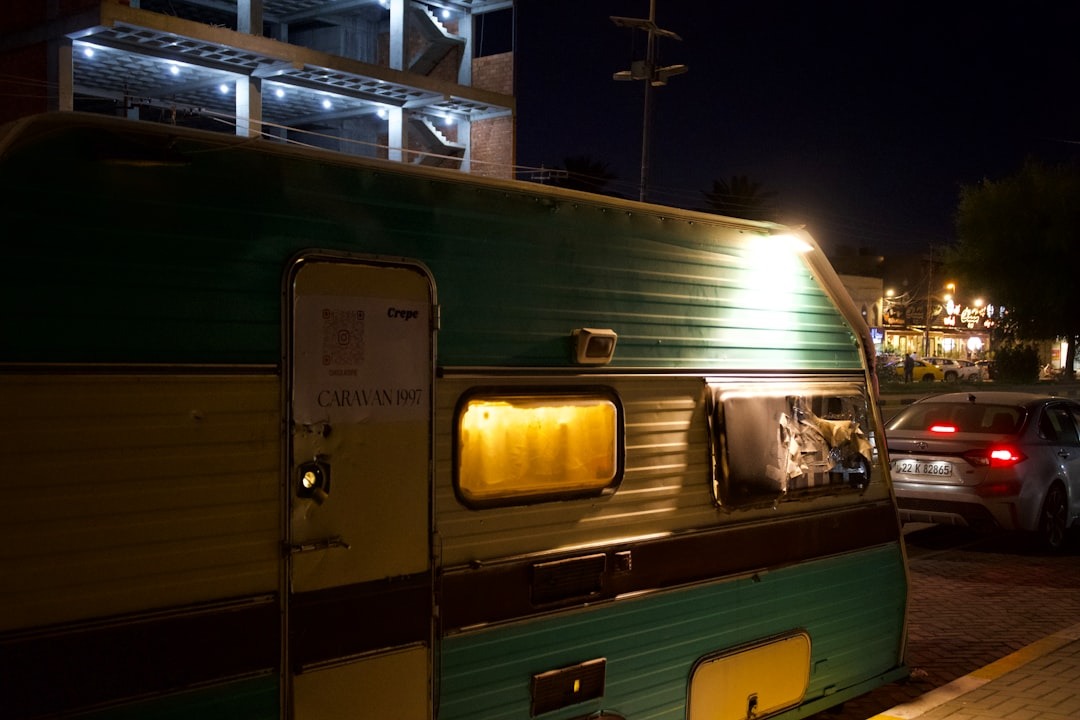
[THEORY] The pilot episode of Breaking Bad is tonally different from almost everything that follows it. It has a heightened, almost surreal quality — the opening sequence of Walt driving a Winnebago through the desert in his underwear, bodies sliding around in the back, a siren approaching — that feels more like a dream sequence than the gritty realism of later episodes. The show’s production design becomes notably more grounded and consistent after the pilot.
[THEORY] Proponents of the dying dream theory argue this tonal shift is itself evidence: the pilot represents the dream’s construction — loose, heightened, not yet fully formed — while later episodes represent the dream stabilising into internal consistency as Walt’s dying mind builds a more elaborate fantasy.
Walt’s Video Confession
[THEORY] Early in the pilot, before he has done anything criminal, Walt records a video message for his family — speaking as though he knows he will not see them again. He records it alone, in the middle of the night, with the camera focused on his face as he says goodbye. This scene has no narrative function in the pilot’s plot — Walt does not die, the video is never used, and it is largely forgotten. [THEORY] The dying dream theory interprets it as the last real thing Walt does before the fantasy begins: a genuine goodbye recorded by a man who knows he is dying, around which his dying mind then constructs the Heisenberg story.
The Impossibly Perfect Finale
This is the strongest piece of evidence the theory’s proponents point to — and it is genuinely difficult to dismiss.
[FACT] The final episode of Breaking Bad — “Felina” — sees Walt achieve almost every goal he has pursued across the series. He recovers his money and arranges for it to reach his family. He poisons Lydia. He engineers an automated machine gun that kills the entire white supremacist gang. He frees Jesse. He says a meaningful goodbye to Skyler. He sees his son one last time. He dies in the meth lab — doing what he loved, on his own terms, with a faint smile on his face.
[THEORY] The dying dream theory asks: is this realistic? In the world the show had established — a world of chaos, violence, and consequences — does it make narrative sense that a man alone, dying of cancer, with no resources and every law enforcement agency in the country looking for him, manages to tie up every loose end perfectly in a single night? Or does it make more sense as wish fulfilment — as the ending a dying man’s mind would construct for the story it has been telling itself?
Compare “Felina” to the finale of The Sopranos — another critically acclaimed crime drama — which ends in deliberate ambiguity and unresolved tension, refusing to give the audience the satisfaction of a clean resolution. Vince Gilligan deliberately chose the opposite approach for Breaking Bad, giving Walt — and the audience — exactly what the story seemed to demand. [THEORY] The dying dream reading interprets this not as a narrative choice about Walt’s story, but as a property of the fantasy itself: dying minds construct satisfying endings, not realistic ones. Walt’s dream ends the way Walt would want it to end, because Walt is constructing it.
The New Mexico Desert as Liminal Space
[THEORY] The New Mexico landscape functions throughout Breaking Bad in ways that exceed its role as mere setting. The desert — vast, empty, outside normal rules and normal society — is where the most extreme events of the series take place. It is where Walt and Jesse cook. It is where bodies are dissolved. It is where Walt buries his money. In many literary and psychological traditions, the desert functions as a space between life and death — a liminal zone where the normal rules do not apply.
[THEORY] Some proponents of the dying dream theory argue that the desert’s symbolic function in Breaking Bad is consistent with its role as the landscape of a dying man’s imagination — a place outside reality where anything is possible and consequences are suspended.

The Walter White Nobody Talks About
The dying dream theory gains additional weight when you consider who Walter White actually is before the cancer diagnosis — and how comprehensively the Heisenberg fantasy addresses every failure and humiliation of his real life.
[FACT] Walt is established in the pilot as a man who co-founded a company called Gray Matter Technologies that became enormously valuable — and from which he walked away, selling his share for $5,000, only to watch his former partner and the woman he loved build it into a billion-dollar enterprise. He teaches high school chemistry to students who do not respect him, works a second job at a car wash to make ends meet, and is treated as peripheral by almost everyone in his life.
[THEORY] Heisenberg is the precise inversion of everything real Walt is. Where Walt is ignored, Heisenberg is feared. Where Walt is financially desperate, Heisenberg accumulates millions. Where Walt is treated as unimportant, Heisenberg is the most important person in every room he enters. Where Walt lost control of his intellectual legacy at Gray Matter, Heisenberg controls an empire built on his own chemistry.
[THEORY] The dying dream theory argues this is not character development — it is wish fulfilment. The dying mind of Walter White does not imagine a realistic criminal career. It imagines the perfect revenge fantasy: a version of himself that cannot be overlooked, that cannot be dismissed, that cannot be humiliated, because everyone around him is either working for him or afraid of him.
The Case Against — Why the Theory Has Limits
In the interest of honest analysis, the counter-arguments deserve serious treatment.
The most straightforward counter-argument is that Breaking Bad is a meticulously crafted show with an exceptionally gifted writing team, and the elements the dying dream theory identifies as evidence of fantasy are simply evidence of good television writing. The pilot’s unusual tone is a pilot being a pilot — finding its feet. The video confession is character establishment. The satisfying finale is the result of a writing room that spent years planning how to end the story. Vince Gilligan has spoken at length about the deliberate construction of Walt’s arc — and none of those interviews suggest he was writing a dream narrative.
Critics of the dying dream theory argue that “Felina” is satisfying not because it is a fantasy but because it is the logical conclusion of the story Gilligan told. Walt is a chemistry genius who has been planning obsessively for years — it is not implausible that he could engineer one final, precise solution to his problems. The machine gun device, the ricin, the plan to give his money to his family through Gretchen and Elliott — these are all consistent with Walt’s established character and capabilities. A satisfying ending is not evidence of fantasy.
Fan theories are most compelling when they illuminate something the creator intended but left implicit. The dying dream theory may be a genuinely interesting interpretive lens — but if Gilligan did not intend it, it is a reading rather than a revelation. The show’s intensive DVD commentaries and behind-the-scenes documentation suggest a writing process focused on character psychology and moral consequence, not on constructing a dream narrative. This does not make the theory wrong as an interpretation — but it limits how far it can be taken as the show’s actual meaning.
What the Theory Gets Right — Regardless of Intent
Whether or not Vince Gilligan intended the dying dream reading, the theory illuminates something genuinely true about Breaking Bad that makes it one of the richer interpretations of the show available.
[THEORY] Breaking Bad is, at its core, a story about fantasy — specifically the fantasy of masculine control, significance, and power that Walter White has been denied by his actual life. The show dramatises the consequences of a man choosing to live inside that fantasy rather than accepting reality. Whether the fantasy is literal — a dying dream — or figurative — a real criminal career driven by ego rather than necessity — the psychological structure is the same.
Walt does not cook meth because he needs money. The show makes this explicit: his former partners at Gray Matter offer him money, his brother-in-law offers resources, his family has options. Walt cooks meth because Heisenberg is who he wants to be. The cancer is not the reason — it is the permission slip.
[THEORY] The dying dream theory, in this reading, is not a factual claim about what happened in the show’s narrative. It is a metaphor that the show itself seems to endorse: Walter White was always already living in a fantasy about who he was and what he deserved. The meth empire is just the fantasy made literal.
Conclusion
The Walter White Dying Dream theory cannot be proven. Vince Gilligan has not confirmed it. The show does not state it explicitly. As a factual claim about Breaking Bad’s narrative, it is speculative.
But as an interpretive lens — as a way of understanding what Breaking Bad is actually about — it is one of the most illuminating readings available. It reframes the entire show as a psychological portrait of wish fulfilment, masculine fantasy, and the stories we tell ourselves about who we could have been if only the world had been different.
Walter White told himself a story. In the story, he was Heisenberg. He was feared. He was significant. He mattered.
Whether that story happened in reality or in the final firing of a dying man’s neurons — the tragedy is the same either way.
Written and reviewed by the MysteryVerse editorial team. All factual claims about the show’s production, creator statements, and episode content are sourced from verified interviews, DVD commentaries, and official AMC materials. All interpretive content is clearly labelled as [THEORY] or [SPECULATION].
Have a different theory about Breaking Bad? Contact us — we would love to hear it.