Estimated read time: 12 minutes | Category: Urban Legends | Last updated: June 2025

The Ship That Vanished — And the Story That Never Did
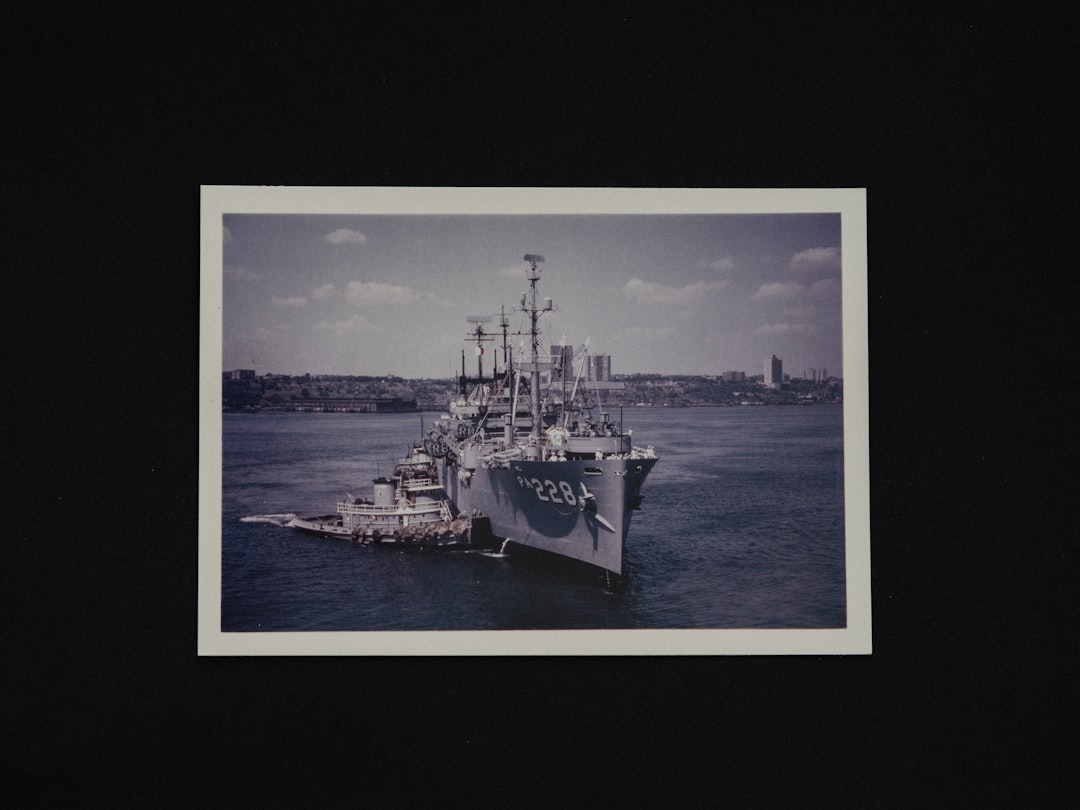
According to the legend, on the night of October 28, 1943, something extraordinary happened in the Philadelphia Naval Shipyard. The USS Eldridge — a brand new destroyer escort — was subjected to a top-secret experiment involving powerful electromagnetic fields. What happened next, depending on which version of the story you encounter, was either a miracle of physics or a catastrophe of human suffering.
The ship turned invisible. It teleported — instantaneously — to Norfolk, Virginia, over 200 miles away, before reappearing in Philadelphia minutes later. Sailors aboard went mad. Some burst into flames spontaneously. Others disappeared entirely. The most disturbing accounts describe crew members found physically fused into the ship’s metal hull — merged with the steel itself, still alive and screaming.
The US Navy, naturally, denied everything. The experiment was classified. The survivors were silenced. The truth was buried.
It is a remarkable story. It is also, when examined against the historical record, almost entirely fabricated — built from one man’s obsessive annotations in a library book, amplified by a credulous UFO researcher, and transformed over decades into one of the most enduring military conspiracy myths in American history.
But the real story of how the Philadelphia Experiment came to exist is, in its own way, just as fascinating as the legend.
What We Know For Certain
- [FACT] The USS Eldridge (DE-173) was a Cannon-class destroyer escort commissioned by the US Navy on August 27, 1943.
- [FACT] The ship’s official deck logs — government documents recording the ship’s position and activities every day — show that the Eldridge was not in Philadelphia on October 28, 1943. It was in New York.
- [FACT] The Philadelphia Experiment story originates almost entirely from a single source: a man named Carl M. Allen, also known as Carlos Allende, who wrote bizarre annotated letters and marginal notes claiming to be an eyewitness to the experiment.
- [FACT] The US Navy has investigated the Philadelphia Experiment claims multiple times and found no evidence that any such experiment took place. The Office of Naval Research officially stated in 1996 that the story is fictional.
- [FACT] Surviving crew members of the USS Eldridge, including those who served aboard her in 1943, have consistently and categorically denied that any unusual experiment took place.
- [FACT] The US Navy did conduct real degaussing experiments during World War II — wrapping ships in electromagnetic cables to reduce their magnetic signature and protect against magnetic mines. This real programme is likely the seed from which the legend grew.
- [FACT] A 1984 film titled The Philadelphia Experiment significantly amplified public awareness of the legend, introducing many of its now-familiar details to a mass audience.
The Origin — One Man and a Library Book
To understand the Philadelphia Experiment, you need to understand Carl M. Allen — because without him, the story does not exist.
[FACT] In 1955, a UFO researcher named Morris K. Jessup published a book called The Case for the UFO, arguing that extraterrestrial beings had visited Earth. The book was modestly successful in UFO circles but unremarkable by the standards of the genre.
[FACT] Shortly after publication, Jessup began receiving a series of extraordinary letters from a man who identified himself variously as “Carlos Allende” and “Carl M. Allen.” The letters, written in an erratic style with unusual capitalisation and bizarre marginal annotations, claimed that Jessup’s theories about physics were correct — and that the US Navy had already proved them by making a ship invisible in 1943.
[FACT] Allen claimed to have been a crew member aboard the SS Andrew Furuseth, a merchant vessel he said was anchored nearby and witnessed the Eldridge’s disappearance and reappearance. He described sailors going mad, men bursting into flames, and crew members becoming physically fused with the ship.
[FACT] A copy of Jessup’s book was subsequently sent to the Office of Naval Research, annotated in the same eccentric style as Allen’s letters, with additional details about the experiment added in the margins. The Navy, curious about the annotations, had the book privately reprinted with the marginal notes included for internal review.
[ANALYSIS] The Navy’s interest in the annotated book has been cited by conspiracy theorists as evidence of official knowledge. The more prosaic explanation — that intelligence officers were curious about an unusual piece of correspondence, not that they were covering up a teleportation experiment — is considerably more plausible.
What Happened to Carl Allen
[FACT] Carl M. Allen was a merchant seaman who served aboard the SS Andrew Furuseth. His service records confirm he was in the general area of the Atlantic seaboard in late 1943. Beyond that, his claims rest entirely on his own testimony — testimony that investigators have found inconsistent, unverifiable, and in several instances demonstrably false.
[FACT] Allen was known to acquaintances and investigators as an eccentric, possibly disturbed individual who had a history of making extraordinary claims and leaving bizarre annotated documents. In 1969, a researcher discovered Allen had apparently broken into a library, stolen a copy of Jessup’s annotated book that had been donated to the collection, and re-annotated it further before returning it.
[FACT] Morris Jessup, the UFO researcher whose book had launched the correspondence, became increasingly distressed by the attention and notoriety the Allen letters brought him. He died in 1959 in what was ruled a suicide. His death has been claimed by some conspiracy theorists as evidence he was silenced by the government — a claim with no supporting evidence.
[ANALYSIS] The trajectory of Carl Allen’s story follows a pattern familiar from the study of conspiracy origin myths: a single eccentric source, unverifiable personal testimony, claims that conveniently cannot be disproved, and a ready audience willing to believe that official denials are themselves evidence of a cover-up.
The Official Records — What They Actually Show
The most straightforward rebuttal of the Philadelphia Experiment legend is the simplest one: the ship was not there.
[FACT] The USS Eldridge’s official deck logs are preserved in the National Archives and have been examined by multiple independent researchers. They show clearly that on October 28, 1943 — the date of the alleged experiment — the Eldridge was not in Philadelphia. She had left the Philadelphia Naval Shipyard on September 27 and was operating out of New York and the surrounding area through October and into November.
[FACT] Crew members of the USS Eldridge formed a veteran’s association after the war. When the Philadelphia Experiment story gained public prominence in the 1970s and 1980s, members of this association were interviewed repeatedly by journalists and researchers. Their accounts were consistent and unambiguous: nothing unusual happened aboard the Eldridge. There was no experiment. There was no teleportation. There were no crew members fused into the hull.
[FACT] Edward Dudgeon, a US Navy veteran who served on a ship near the Eldridge during the war, provided what is considered one of the most credible explanations for the origin of the “invisibility” claims. He described the Navy’s degaussing programme — in which ships were wrapped in electromagnetic cables energised with electrical current to neutralise their magnetic fields and protect against magnetic mines. The cables produced visible effects including a green glow around the ship’s hull, interference with compasses, and disorientation among crew. [THEORY] It is widely believed that garbled accounts of real degaussing operations, passed through multiple unreliable narrators over years, provided the raw material from which Allen constructed his legend.
The Science — Could Any of It Be Real?
Proponents of the Philadelphia Experiment sometimes invoke Einstein’s unified field theory — the attempt to mathematically reconcile electromagnetism and gravity — as the theoretical basis for the experiment. The argument runs that if the Navy had achieved a working unified field, they could have bent light and radar around the ship, rendering it invisible, and potentially achieved teleportation through manipulation of space-time.
Einstein worked on a unified field theory for the last three decades of his life and never completed it. [FACT] A unified field theory that reconciles electromagnetism and gravity in a way that would permit the manipulation of space-time for teleportation or optical invisibility does not exist in established physics. Modern physics has made significant progress toward unification through quantum field theory and string theory, but nothing approaching the capabilities claimed by Philadelphia Experiment proponents exists or is theoretically imminent. The claim that the 1943 US Navy achieved this breakthrough — and then classified it so thoroughly that no trace remains — requires believing that the most significant scientific achievement in human history was accomplished, used once, and then buried without a single credible witness coming forward in over 80 years.
A persistent extension of the Philadelphia Experiment legend holds that the Navy successfully developed teleportation and invisibility technology in 1943, that it has been in classified military use ever since, and that it underlies various modern military capabilities including stealth technology. [FACT] Stealth technology — which reduces radar cross-section through geometry and radar-absorbing materials — is thoroughly documented, has nothing to do with electromagnetic field manipulation, and was developed through publicly traceable research programmes beginning in the 1970s. There is no credible evidence connecting stealth technology to the Philadelphia Experiment.
Why the Legend Persists
Given the weight of evidence against the Philadelphia Experiment — the ship’s logs, the crew’s testimony, the absence of any corroborating documentation, the single eccentric source — why does the legend continue to attract believers decades after it was comprehensively investigated and debunked?
Several factors sustain it:
- The unfalsifiability trap: Every piece of contrary evidence — the deck logs, the crew’s denials, the Navy’s official statements — can be reframed as part of the cover-up. A story structured so that all evidence against it is itself evidence for it cannot be disproved by conventional means.
- The real programme as a hook: The Navy’s degaussing programme was real. The electromagnetic cables were real. The green glow was real. This genuine, documented programme provides a factual foundation that gives the legend plausibility to those who encounter it without knowing the degaussing context.
- The 1984 film: The Philadelphia Experiment brought the story to millions of people who had never heard of Carl Allen or Morris Jessup. Cinema has an unparalleled ability to make fictional events feel real — especially when the film presents itself as based on a true story.
- The appeal of secret knowledge: Believing in the Philadelphia Experiment means believing you know something the government does not want you to know. This is psychologically rewarding in a way that “a merchant seaman wrote some weird letters in 1955” is not.
[ANALYSIS] The Philadelphia Experiment is a textbook example of how urban legends are constructed and sustained. It has a kernel of real history — the Navy’s wartime electromagnetic programmes. It has an originating myth-maker — Carl Allen. It has official denial that gets reframed as confirmation. And it has a popular culture amplifier — the 1984 film — that cemented the story in public consciousness regardless of its factual basis.
The Real Wartime Science
The irony of the Philadelphia Experiment legend is that the real wartime naval science it obscures is genuinely interesting — and largely forgotten because the fictional version has consumed all the attention.
[FACT] The degaussing programme was a significant and successful wartime innovation. By neutralising a ship’s magnetic field, it rendered vessels immune to magnetic mines — one of the most dangerous threats to Allied shipping in World War II. The programme saved an unknown but significant number of ships and lives.
[FACT] The US Navy also conducted extensive radar invisibility research during World War II — not through electromagnetic field manipulation, but through conventional camouflage, hull design, and early radar-absorbing paint experiments. This real research programme forms the authentic foundation of what eventually became stealth technology.
[ANALYSIS] The gap between the real science and the legend is instructive. The real programmes were impressive, genuinely important, and historically significant. They just were not as dramatic as teleportation — and so they have been largely forgotten while the fictional version took their place in public memory.
Conclusion
The Philadelphia Experiment did not happen. The USS Eldridge was not in Philadelphia on October 28, 1943. No sailors were fused into its hull. No ship was teleported to Norfolk. The story was built by one eccentric man’s letters, amplified by UFO enthusiasts, and cemented by a Hollywood film.
But the Philadelphia Experiment as a cultural object — as a story — tells us something real and important. It tells us how legends are constructed from fragments of genuine history. It tells us how official denial can be weaponised into confirmation. And it tells us that the human appetite for secret knowledge — for the belief that somewhere, behind the official record, something extraordinary was done and then hidden — is powerful enough to sustain a story for eighty years against the clear weight of documentary evidence.
The ship’s logs say the Eldridge was in New York. The crew says nothing unusual happened. The Navy says the experiment never occurred.
And still, the legend persists. Because some stories are too satisfying to let the facts kill them.
Written and reviewed by the MysteryVerse editorial team. Facts sourced from USS Eldridge official deck logs (National Archives), US Office of Naval Research official statements, interviews with USS Eldridge veterans, and investigative research by journalists and historians including Jacques Vallée’s analysis in Revelations (1991).
All analysis is clearly labelled. The Philadelphia Experiment is an urban legend — this article presents the documented evidence honestly.
Spotted an error? Contact us and we will correct it promptly.