Estimated read time: 13 minutes | Category: Science Mysteries | Last updated: June 2025

The Most Unsettling Question in Science
It was lunchtime in the summer of 1950 at Los Alamos National Laboratory. Enrico Fermi — one of the greatest physicists of the 20th century, the man who built the first nuclear reactor — was eating with colleagues and the conversation turned to a recent news story about UFO sightings. Fermi listened, made a few calculations in his head, and then asked a question that has echoed through science ever since.
“Where is everybody?”
The question sounds simple. It is not. The universe is 13.8 billion years old. It contains an estimated two trillion galaxies, each containing hundreds of billions of stars, many of which have planets orbiting in zones where liquid water — and therefore life as we understand it — could exist. Even if intelligent life is extraordinarily rare, the sheer scale of the universe suggests there should be thousands, perhaps millions, of civilisations out there.
And yet — silence. No confirmed signals. No visitors. No evidence of anyone else at all.
This is the Fermi Paradox. And the proposed solutions range from quietly reassuring to the most disturbing ideas in all of science.
What We Know For Certain
- [FACT] The observable universe is approximately 93 billion light-years in diameter and contains an estimated two trillion galaxies.
- [FACT] Our Milky Way galaxy alone contains an estimated 100-400 billion stars, with the majority likely hosting planetary systems.
- [FACT] The Drake Equation — formulated by astronomer Frank Drake in 1961 — is a probabilistic framework for estimating the number of active, communicating civilisations in the Milky Way. Depending on the values used for its variables, estimates range from less than one to millions.
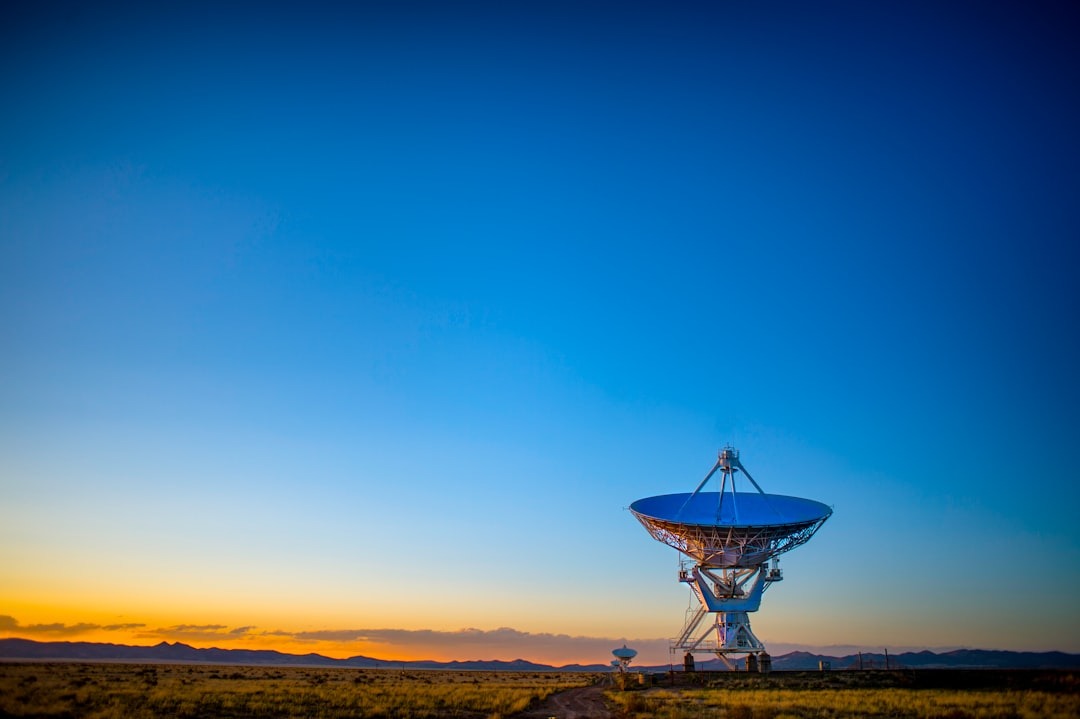
- [FACT] The SETI Institute and predecessor organisations have been systematically searching for radio signals from extraterrestrial civilisations since 1960. No confirmed signal has been detected — with the single exception of the 1977 Wow! Signal, which has never been repeated or explained.
- [FACT] NASA’s Kepler and TESS space telescopes have confirmed the existence of thousands of exoplanets, including hundreds in the habitable zones of their stars — where liquid water could theoretically exist.
- [FACT] Life on Earth appeared relatively quickly after the planet formed — within the first billion years — suggesting that the emergence of life from chemistry may not be as improbable as once thought.
- [FACT] No confirmed evidence of extraterrestrial life — intelligent or otherwise — has ever been detected anywhere in the universe.
The Scale of the Problem
To understand why the Fermi Paradox is so genuinely puzzling, you need to internalise the scale of the universe and the timescales involved.
[FACT] The Milky Way is approximately 100,000 light-years across. A civilisation that developed faster-than-light travel — or even simply launched self-replicating probes that spread at a fraction of the speed of light — could theoretically colonise the entire galaxy within a few million years.
[FACT] A few million years sounds like an enormous timescale. In cosmic terms, it is nothing. The universe is 13.8 billion years old. If a civilisation had arisen anywhere in the Milky Way just 100 million years before us — a blink in cosmic time — they would have had more than enough time to explore and colonise the entire galaxy many times over.
[FACT] Even without faster-than-light travel, a civilisation expanding at just 1% of the speed of light could cross the Milky Way in 10 million years. The galaxy should, statistically, be full. It appears to be empty.
[ANALYSIS] This is the heart of the paradox. It is not just that we have not received a radio signal. It is that a universe old enough and large enough to have produced millions of civilisations shows no sign of any of them — no megastructures, no colonised star systems, no signals, no probes, no evidence of any kind. The silence is as loud as a scream.
The Drake Equation
[FACT] In 1961, astronomer Frank Drake formulated an equation to estimate the number of active, communicating civilisations in the Milky Way at any given time. The equation multiplies together a series of probabilities and rates:
- The rate of star formation in the galaxy
- The fraction of stars with planetary systems
- The number of planets per system that could support life
- The fraction of those planets where life actually emerges
- The fraction of life-bearing planets where intelligent life evolves
- The fraction of intelligent civilisations that develop detectable technology
- The average lifespan of such a technological civilisation
[FACT] The early terms in the Drake Equation — star formation rates, fraction of stars with planets — are now reasonably well constrained by astronomical observation. The later terms — particularly the fraction of planets where life emerges and the average lifespan of technological civilisations — are almost entirely unknown and span many orders of magnitude depending on assumptions.
[ANALYSIS] The Drake Equation’s great value is not that it produces a reliable number — it does not. Its value is that it identifies exactly which variables matter and makes clear which ones we do not yet know. The Fermi Paradox can be restated as: given the early terms of the Drake Equation, why do the observable results suggest the later terms are vanishingly small?
The Proposed Solutions
Group 1 — They Are Out There But We Cannot Detect Them
Advanced civilisations are aware of us but have chosen not to make contact — either to allow our natural development, to observe us without interference, or because contact with a less developed civilisation is considered dangerous or unethical. Under this theory, the silence is deliberate. We are in a kind of cosmic nature reserve, watched but not approached. [SPECULATION] The zoo hypothesis is difficult to test and relies on assumptions about the motivations of unknown civilisations. It requires that every advanced civilisation in the galaxy has independently agreed to the same non-contact policy — with no defectors.
SETI has primarily searched for radio signals because radio is the technology we use. Advanced civilisations might communicate using technologies we have not yet developed — neutrino beams, gravitational waves, quantum entanglement, or methods entirely outside our current physics. We may be like a civilisation searching for telephone lines while everyone else is using the internet. [FACT] This is a genuinely serious scientific concern and has driven recent proposals to expand SETI searches beyond radio frequencies into optical, infrared, and other wavelengths.
The SETI programme, despite decades of searching, has surveyed only a tiny fraction of the observable universe in a tiny fraction of possible frequencies. The galaxy is enormous and the search so far is statistically limited. The absence of detection does not prove absence of signals. [FACT] This is mathematically valid — the volume of cosmic space and frequency range that has been searched thoroughly is a small fraction of what would need to be covered for a truly comprehensive search.
Group 2 — They Were There But Are Gone
This is the most discussed — and most disturbing — solution to the Fermi Paradox. Proposed by economist Robin Hanson in 1998, the Great Filter theory holds that there is some step in the development from simple chemistry to galaxy-colonising civilisation that is extraordinarily difficult to pass — so difficult that virtually no civilisation ever makes it through.
The filter could be behind us — meaning the emergence of life, or of complex cells, or of intelligence itself is so improbable that we may be genuinely alone or nearly alone in the galaxy. If the filter is behind us, we are extraordinarily lucky.
Or the filter could be ahead of us — meaning there is some barrier that advanced civilisations routinely fail to cross. Nuclear war. Engineered pandemics. Climate collapse. Artificial intelligence. Some technology that every civilisation eventually develops and that destroys them before they can spread beyond their home system. If the filter is ahead of us, we are in serious danger.
[ANALYSIS] The Great Filter is the solution to the Fermi Paradox that should concern us most — because finding microbial life on Mars or Europa would be deeply bad news. It would confirm that the emergence of simple life is easy, pushing the Great Filter further along the development chain — and making it more likely that the filter is something advanced civilisations encounter and fail to survive.

A specific version of the Great Filter: technological civilisations routinely develop the ability to destroy themselves — through nuclear weapons, engineered biology, artificial intelligence, or environmental collapse — before they develop the ability to spread beyond their home system. The average lifespan of a technological civilisation may be measured in centuries rather than millions of years, making the galaxy populated by brief technological flickers that never overlap in space or time. [FACT] This theory gained significant traction after the development of nuclear weapons demonstrated that a species could develop the ability to destroy itself within decades of developing radio technology.
Group 3 — The Universe Is Stranger Than We Assume
Proposed by paleontologist Peter Ward and astronomer Joe Kirschvink, the Rare Earth Hypothesis argues that the conditions required for complex intelligent life are so specific and so rare that Earth may be genuinely unique or nearly unique in the galaxy. The precise mass of Jupiter — which deflects incoming asteroids. The unusual size of our Moon — which stabilises Earth’s axial tilt. The position of our solar system within the galaxy. The specific timing of our sun’s formation. The combination of factors required for complex life may be so improbable that it has occurred essentially once. [THEORY] This theory is scientifically respectable but deeply contested — many astrobiologists argue it underestimates life’s adaptability.
If we exist in a simulated reality, the apparent absence of extraterrestrial civilisations may simply be because the simulation has not rendered them — or because the simulators have chosen not to include them. This theory resolves the Fermi Paradox neatly but at the cost of raising questions far more difficult than the ones it answers. It is included here because it is widely discussed in the context of the paradox, not because it has scientific support.
Popularised by Chinese science fiction author Liu Cixin in his Three Body Problem trilogy, the Dark Forest theory proposes that the silence of the universe is the result of every civilisation hiding — because the universe is a dark forest in which any civilisation that reveals its location risks being destroyed by a more advanced one before it can become a threat. Every civilisation is a hunter moving silently through the trees, because every other civilisation is potentially an existential threat. Under this theory, the correct response to detecting us would be our immediate destruction. [SPECULATION] This is a compelling narrative framework that has no empirical support but has significantly influenced thinking about the risks of active SETI — intentionally broadcasting our location.
The Most Disturbing Implication
Of all the proposed solutions to the Fermi Paradox, the Great Filter carries the most profound implications for humanity — and the discovery that would most shift the probabilities is one that most people would instinctively celebrate.
[ANALYSIS] If we discover microbial life on Mars — simple bacteria or their fossils — it would be one of the greatest scientific discoveries in human history. It would confirm that life emerges readily from chemistry wherever conditions allow. It would suggest the universe is teeming with life.
It would also be, potentially, catastrophic news for our long-term survival.
Because if simple life is common — if it arises on Mars, on Europa, on thousands of other worlds — then the Great Filter is probably not behind us. Life getting started is not the hard part. The hard part is something ahead. Something that almost every civilisation that reaches our level of development subsequently fails to survive.
[ANALYSIS] The best outcome for humanity, under the Great Filter framework, is to find that we are genuinely, cosmically alone. That the emergence of life and intelligence is so improbable that we are the only ones — or among the very few. That the filter is behind us, not ahead. That the silence of the universe is the silence of absence rather than the silence of extinction.
The night sky, in this reading, looks most hopeful when it is most empty.
Where the Science Stands
[FACT] The search for extraterrestrial life has expanded significantly in the 21st century beyond radio SETI. NASA’s astrobiology programme actively searches for biosignatures — chemical signs of life — in the atmospheres of exoplanets using the James Webb Space Telescope. The search for simple microbial life within our own solar system continues with Mars missions, plans for Europa exploration, and analysis of data from the Cassini mission to Enceladus.
[FACT] Breakthrough Listen, funded by investor Yuri Milner, launched in 2015 as the most comprehensive SETI programme in history — scanning the one million nearest stars to Earth and the one hundred nearest galaxies for signs of technological civilisation. As of 2025 it has produced no confirmed detections.
[FACT] The Fermi Paradox remains unsolved. No consensus solution has emerged from the scientific community. It is an open problem — one of the deepest open problems in all of science.
Conclusion
Fermi asked his question at lunch in 1950 and the scientific community has been unable to answer it for seventy-five years. The universe is old enough, large enough, and — as far as we can tell — hospitable enough to have produced millions of civilisations. And yet we find ourselves in what appears to be an empty, silent cosmos.
The possible explanations span the full range from reassuring to terrifying. Perhaps we are genuinely alone — the improbable product of an extraordinary run of cosmic luck. Perhaps the universe is full of life that we simply have not found yet. Perhaps every civilisation eventually encounters something it cannot survive — and we are approaching that encounter without knowing it.
We do not know. That is the honest answer, and it is one of the most profound honest answers in the history of human inquiry.
The silence continues. We are still listening. And the question Fermi asked over lunch remains, three quarters of a century later, completely unanswered.
Where is everybody?
Written and reviewed by the MysteryVerse editorial team. Facts sourced from NASA astrobiology programme publications, SETI Institute research papers, Robin Hanson’s original Great Filter paper (1998), Frank Drake’s published work on the Drake Equation, and peer-reviewed astronomical research from the Kepler and TESS missions.
The Fermi Paradox is an active area of scientific research. New findings about exoplanets, biosignatures, and SETI detections may update aspects of this article — check back for updates.
Spotted an error? Contact us and we will correct it promptly.